When to Harvest Tomatoes: Reading the Signs Your Plant Is Giving You
You've spent months watering, feeding, staking, and worrying. The vines are heavy. The fruit is there. And now you're standing in the garden at 7 AM, coffee in hand, staring at a tomato that's almost red and asking yourself: is it ready?
Knowing when to harvest tomatoes is the difference between biting into something that tastes like summer itself and cutting open a mealy, flavorless disappointment. Most gardeners pick too late — waiting for grocery-store-red perfection on the vine — or too early out of impatience. Both cost you flavor.
This guide covers everything: the color stages that actually matter, the squeeze test that tells you more than your eyes can, how to pick tomatoes without damaging the plant, and what to do with all those green ones at the end of the season. Whether you're growing Cherokee Purples or Sun Golds, the principles are the same.

The Color Stages: What Tomato Ripeness Signs Actually Mean
Tomatoes (Solanum lycopersicum) don't ripen like a light switch. They move through six recognized stages, and understanding them changes how you harvest:
- Green: Fully sized but uniformly green. The fruit is firm, the seeds are developing, and there's no color break yet. Not ready — unless you're making fried green tomatoes (more on that later).
- Breaker: The first hint of color appears, usually at the blossom end. You'll see a faint blush of pink, yellow, or orange covering about 10% of the surface. This is the earliest you can pick and still get the fruit to ripen off the vine.
- Turning: Color covers 10-30% of the surface. The tomato has committed to ripening — ethylene production is in full swing.
- Pink: 30-60% colored. The fruit is softening. Many experienced growers pick at this stage for indoor ripening, especially for varieties prone to cracking.
- Light red: 60-90% colored. Almost there. The flavor compounds are building rapidly.
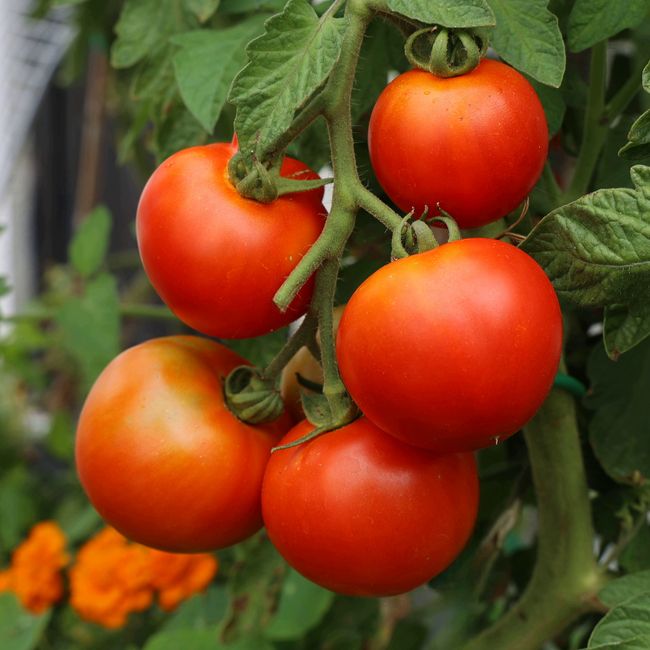
- Red (fully ripe): 90%+ color. Maximum flavor — but also maximum vulnerability to cracking, pest damage, and falling off the vine.
Here's what most guides won't tell you: a tomato picked at the breaker stage and ripened on your counter will taste nearly identical to one left on the vine until fully red. Once the breaker stage hits, the plant has done its job. The fruit produces its own ethylene gas and will continue developing sugars and acids internally. What the vine adds after breaker is mostly water weight — which can actually dilute flavor.
The Squeeze Test: How to Pick Tomatoes Using Touch
Color gets all the attention, but experienced growers know that feel tells you more than sight. Here's how to read a tomato by touch:

Cup the fruit gently in your palm. Don't squeeze with your fingertips — that causes bruising. Press lightly with the flat of your fingers:
- Rock hard: Not ready. The flesh hasn't started converting starches to sugars yet.
- Firm with slight give: The sweet spot. This is a tomato at peak harvest readiness. It will give slightly under gentle pressure, like pressing on your cheek, but spring back.
- Soft: Fully ripe or overripe. Use immediately — this fruit won't improve. Still delicious for sauces and salsas.
- Mushy or has cracks: Past its prime for fresh eating. Salvageable for cooking if no mold is present.
Combine the squeeze test with color reading and you'll almost never misjudge ripeness. A tomato that's at the turning stage but already has some give? Pick it. One that's fully red but still rock-firm? Leave it another day or two.
The Stem Snap Test
There's one more trick. Ripe tomatoes develop what's called an abscission layer — a natural weak point where the stem meets the fruit. When the tomato is ready, a gentle twist or upward bend will cause it to snap cleanly at the knuckle (the swollen joint on the stem). If you have to pull, tug, or use force, the fruit isn't ready to let go.
How to Pick Tomatoes Without Damaging the Plant
Harvesting technique matters more than most people think. Yank a tomato off the vine and you can tear the stem, rip off branches, or damage the plant's ability to set more fruit. Here's the right way:
- Support the vine. Hold the branch with one hand above the fruit cluster.
- Twist and lift. Grip the fruit gently and twist upward. If it's ripe, it will snap at the knuckle with minimal pressure.
- Use pruners for stubborn stems. Some heirloom varieties have thick, woody stems that don't snap cleanly. A clean cut with garden snips beats tearing. Cut just above the calyx (the green star-shaped cap) and leave the calyx attached to the fruit — it helps the tomato store longer.
- Harvest in the morning. Fruit picked in early morning, before the day's heat, will be firmer, cooler, and less prone to bruising. The plant is also fully turgid, so you're less likely to cause wilting.
Place harvested tomatoes in a single layer — never stack them. A shallow basket, a cardboard flat, or even a baking sheet lined with a kitchen towel works perfectly. Stacking causes pressure bruises that accelerate spoilage.
Cherry vs. Beefsteak: Timing Differences That Matter

Not all tomatoes play by the same rules. The variety you're growing changes when and how you pick:
Cherry and Grape Types
Small-fruited varieties like Sun Gold, Sweet 100, and Juliet ripen fast — sometimes seemingly overnight. They also crack easily when overripe, especially after rain. Key tips:
- Pick daily once the first fruits color up. Cherry types don't wait for you.
- They're best eaten fully vine-ripened since they rarely crack at the stem end the way large tomatoes do.
- Harvest the entire cluster (truss) when most fruits are colored. The stragglers will finish ripening off the vine.
- Expect 60-70 days from transplant to first harvest for most cherry varieties.
Beefsteak and Large Slicing Types
Big varieties like Brandywine, Cherokee Purple, and Mortgage Lifter need 80-100 days from transplant — sometimes longer. They're worth the wait, but they demand more harvest attention:
- Pick at the pink or light red stage. Large fruits are magnets for cracking, splitting, and pest boring once fully ripe on the vine.
- Heavy beefsteaks can snap branches. Harvest as soon as they show good color break to reduce weight stress on the plant.
- These varieties develop their complex flavor during the final ripening. Counter-ripening for 2-3 days after picking at the pink stage gives you the best of both worlds: no cracking risk and full flavor development.
Paste and Roma Types
San Marzano, Amish Paste, and Roma varieties are workhorses — bred for cooking, not beauty contests. Let them go fully red on the vine. Their thicker walls resist cracking better than slicing types, and the reduced moisture content means they don't get mealy. Pick when the fruit feels heavy for its size and the color is deep and uniform.
Ripening Green Tomatoes Indoors: The Paper Bag Method
End of season. Frost is coming. You've got thirty green tomatoes still on the vine. Don't leave them — those fruits represent weeks of your effort and the plant's energy. Here's how to save them:

The Paper Bag Method
This is the gold standard for ripening green tomatoes indoors:
- Pick all tomatoes that have reached full size, even if completely green. Undersized fruit (less than about 2 inches / 5 cm) won't have enough stored starch to ripen properly.
- Wipe each fruit clean with a dry cloth. Don't wash — moisture invites mold.
- Place 3-4 tomatoes in a brown paper bag. Add one ripe banana or apple — the ethylene from the ripe fruit speeds ripening significantly.
- Fold the bag loosely closed. You want some air exchange but enough enclosure to trap ethylene gas.
- Store at room temperature, ideally 65-75°F (18-24°C). Check every 2-3 days.
Green tomatoes ripened this way typically take 1-3 weeks depending on how far along they were when picked. Breaker-stage fruit will ripen in 5-7 days. Fully green, mature fruit may need the full three weeks.
What Doesn't Work
The windowsill method — lining tomatoes up on a sunny windowsill — is popular but flawed. Direct sunlight heats the fruit unevenly, causing one side to soften while the other stays firm. Sunlight also breaks down lycopene (the compound responsible for red color). Ethylene, not sunlight, is what triggers ripening. A dark counter works better than a sunny window.
Green Tomato Uses: When You Can't Wait (or Don't Want To)

Not every green tomato needs to turn red. Unripe tomatoes have their own culinary identity — tangy, firm, and versatile:
- Fried green tomatoes: The classic. Slice 1/4 inch (6 mm) thick, dredge in cornmeal and seasoned flour, and fry in a cast iron skillet until golden. The tang of the unripe fruit paired with the crispy coating is genuinely special.
- Green tomato chutney: Cook down with onions, vinegar, sugar, and spices for a condiment that pairs perfectly with cheese boards and grilled meats.
- Pickled green tomatoes: A quick brine of vinegar, garlic, and dill transforms firm green slices into a crunchy pickle that lasts months in the fridge.
- Green tomato salsa verde: Blend with tomatillos, jalapeños, and cilantro for a bright, acidic salsa that's different from anything you can make with ripe fruit.
A note on safety: green tomatoes contain solanine, the same compound found in green potatoes. In the small quantities used in cooking, it's not a concern for healthy adults. However, avoid eating large amounts of raw green tomatoes, and don't feed them to children or pets.
Storing Tomatoes for Maximum Flavor: Never Refrigerate
This is the hill worth dying on: do not refrigerate tomatoes. Ever. Not even ripe ones you're "saving for later."
Temperatures below 55°F (13°C) permanently damage the volatile flavor compounds that make a garden tomato taste like a garden tomato. Research from the University of Florida found that refrigerated tomatoes lose up to 65% of their volatile organic compounds — the chemicals responsible for that complex, sweet-tangy-savory taste. Once those compounds break down, they don't come back, even if you bring the fruit to room temperature.
Here's how to store your harvest properly:
- Stem side down. Place tomatoes with the stem scar facing down on the counter. This prevents moisture loss through the scar and reduces the chance of mold entering.
- Single layer, no touching. Crowded tomatoes trap heat and moisture between them, accelerating spoilage.
- Room temperature, out of direct sun. A kitchen counter away from the stove and windows is ideal. 65-75°F (18-24°C).
- Use within 3-5 days of full ripeness. A perfectly ripe tomato is a perishable thing. Plan your meals around your harvest, not the other way around.
If you're drowning in ripe tomatoes and can't eat them fast enough, the best preservation methods are freezing whole (blanch, peel, freeze in bags) or cooking into sauce and canning. Both preserve flavor far better than refrigerating.
Nick's Rooftop Revelation
Nick from New York had been growing tomatoes in containers on his Brooklyn rooftop for three seasons, and every year, the same problem: mealy, bland fruit despite healthy plants and heavy yields. "I was growing Brandywines and Black Krims — varieties that are supposed to taste incredible," he says. "But mine tasted like cardboard compared to what I'd get at the farmers market."
The fix turned out to be two things. First, he was leaving fruit on the vine until fully deep red, which — on a sun-blasted rooftop — meant the interior was essentially cooking before he picked. Second, he was refrigerating his harvest. "I'd pick five or six on Sunday and stick them in the fridge for the week. I didn't know that was destroying them."
Now Nick picks at the pink stage and ripens on his kitchen counter. "Night and day difference. Literally the same plants, same soil, same fertilizer. The only change was when I picked and how I stored. My neighbor tried one and asked what variety it was — she couldn't believe it was the same Brandywine she'd tasted the year before."
Nick tracks his harvest timing and picks using Tendra's smart care reminders, which let him log each plant's days-to-maturity and get nudges when his varieties are approaching their harvest window. "It sounds basic, but having a reminder that says 'Your Brandywine is at 82 days — start checking for color break' actually changed my results. Before, I was just guessing."
Extending Your Harvest Season
The typical tomato harvest window is 6-8 weeks in most zones. But with some planning, you can stretch it to 12 weeks or longer:
- Succession planting: Start a second round of transplants 3-4 weeks after your first planting. The later plants will come into production as the first ones slow down.
- Choose varieties with different maturity dates. Plant an early variety like Early Girl (50-60 days), a mid-season like Cherokee Purple (80 days), and a late-season like Mortgage Lifter (85-95 days). You'll have overlapping harvest windows.
- Pinch late-season flowers. About 6 weeks before your expected first frost date, pinch off any new flowers. This redirects the plant's energy into ripening existing fruit instead of setting new ones that won't have time to mature.
- Use row covers. When nighttime temperatures start dropping below 50°F (10°C), draping lightweight row cover fabric over your plants can buy you an extra 2-3 weeks of harvest. It won't protect against a hard freeze, but it handles light frosts and keeps the microclimate warm enough for continued ripening.
- Pull entire plants. When frost is truly imminent, pull the entire plant — roots and all — and hang it upside down in a garage or shed. The remaining green fruit will continue to ripen slowly for weeks, drawing on the stored energy in the stems. It's not elegant, but it works.
Companion planting also plays a role in extending harvest — basil planted alongside your tomatoes can improve plant health and may enhance flavor compounds in the fruit according to some anecdotal grower reports, while marigolds help deter common pests that would otherwise cut your season short.
Common Harvest Problems and Quick Fixes
Even experienced growers run into these issues:
Cracking and Splitting
Heavy rain after a dry spell causes fruit to absorb water faster than the skin can expand. Prevention: consistent watering (1-2 inches / 2.5-5 cm per week), deep mulching to even out soil moisture, and picking at the pink stage during rainy stretches.
Blossom End Rot
That black, leathery patch on the bottom of the fruit isn't a disease — it's a calcium transport issue triggered by inconsistent watering. The fruit is still edible if you cut away the affected area, but prevention is better than cure. Read our full guide to blossom end rot for the six fixes that actually work.
Sunscald
White or yellow papery patches on the side of the fruit facing the sun. This happens when heavy pruning or leaf loss exposes fruit to direct sunlight. The fix: don't over-prune. Leave enough foliage to shade the fruit, and if a branch breaks, drape a light cloth over exposed tomatoes.
Catfacing
Misshapen, scarred fruit with deep crevices — usually on the first fruits of the season. It's caused by cool temperatures during pollination. The tomato is perfectly safe to eat; it just won't win any beauty contests. No action needed.
Pest Damage at Harvest
Holes, bore marks, and chewing damage right when the fruit ripens is maddening. Hornworms are often the culprit — check your plants daily during peak harvest. Stink bugs also love ripe fruit and cause cloudy, spongy spots under the skin. The best defense is picking at the pink-to-light-red stage before pests get to them first.
A Quick Reference: Harvest Timing by Type
Here's a cheat sheet you can reference throughout the season:
- Cherry/grape types: Pick daily at full color. 60-70 days from transplant. Best fully vine-ripened.
- Standard slicers (Better Boy, Celebrity): Pick at light red. 70-80 days from transplant. Counter-ripen 1-2 days for peak flavor.
- Large heirlooms (Brandywine, Cherokee Purple): Pick at pink-to-light-red stage. 80-100 days from transplant. Counter-ripen 2-3 days.
- Paste/Roma types: Let go fully red on the vine. 75-85 days from transplant. Pick when deep colored and heavy.
- Green for cooking: Pick at full size, uniformly green, firm. Any time during the season.
The Real Secret: It's All About Timing and Temperature
After all the variety research, all the feeding and watering and staking, the harvest is where flavor is won or lost. Pick too early and you miss the sugar development. Pick too late and the sun and rain conspire to turn your hard work into cracks and mush. Refrigerate your harvest and you destroy what makes it special in the first place.
The sweet spot — both literally and figuratively — is picking at that pink-to-light-red stage, ripening for a day or two on the counter, and eating at room temperature. Do that, and even a modest backyard plant will outperform anything from the grocery store by a mile.
Track your varieties, log your harvest dates, and compare what works season to season. If you're managing multiple plants with different maturity dates, Tendra's care reminders can help you stay ahead of each one — so you're picking at the right time instead of scrambling when everything ripens at once.
Discover smart harvest tracking with Tendra — where local gardeners connect and thrive.