You've spent weeks nurturing seedlings, building raised beds, and mapping out your garden rows — but if you're planting tomatoes next to fennel or brassicas beside strawberries, you could be sabotaging your harvest before it starts. A good companion planting chart isn't just a nice reference — it's the difference between a garden that struggles and one that thrives. In this complete companion planting guide, you'll learn exactly what to plant together, which combinations to avoid, and — crucially — why each pairing works at a biological level. Whether you're growing a few raised bed vegetables or managing a full backyard plot, this chart will transform how you plan your garden.
Why Companion Planting Works: The Science Behind the Chart
Companion planting isn't garden folklore — many of the most popular pairings have legitimate scientific backing. The mechanisms fall into four categories:
- Chemical signaling (allelopathy): Plants release compounds through their roots or leaves that either attract beneficial insects or repel pests. Marigolds (Tagetes spp.), for example, release alpha-terthienyl into the soil, which is toxic to root-knot nematodes — a finding confirmed by researchers at the University of Florida's Institute of Food and Agricultural Sciences.
- Physical scaffolding: Tall plants provide structure or shade for shorter companions. Corn supports climbing beans; sunflowers create afternoon shade for heat-sensitive lettuce.
- Nutrient exchange: Legumes (beans, peas, clover) fix atmospheric nitrogen through symbiotic Rhizobium bacteria in their root nodules, enriching the soil for nitrogen-hungry neighbors like corn and squash. Research from Oregon State University Extension measured up to 100 pounds (45 kg) of nitrogen per acre fixed by pole beans in a single season.
- Trap cropping: Some plants attract pests away from your main crops. Nasturtiums (Tropaeolum majus) are aphid magnets — they lure aphids to themselves, keeping them off your kale and broccoli.
That said, not every claim you'll find online has peer-reviewed support. Throughout this companion planting guide, we'll note which pairings are backed by research and which are passed-down garden wisdom that experienced growers swear by.
The Complete Companion Planting Chart by Plant Family
Rather than listing plants alphabetically (like most charts do), we've organized this companion planting chart by plant family "circles." Plants within the same family often share pests and diseases, so grouping them helps you see both allies and enemies at a glance.
The Tomato Family Circle (Solanaceae)

Includes: Tomatoes, peppers, eggplant, potatoes
Best companions and why they work:
- Basil (Ocimum basilicum): Repels aphids, hornworms, and whiteflies. A 2010 study published in the Journal of the Science of Food and Agriculture found that basil interplanted with tomatoes reduced thrips damage by up to 70%. Some gardeners also report improved tomato flavor, though this is anecdotal.
- Carrots: Loosen the soil around tomato roots, improving water penetration. Their delicate foliage fills the understory without competing for light.
- Marigolds: Kill root-knot nematodes through root exudates (research-backed). Also attract hoverflies, whose larvae consume aphids.
- Parsley & chives: Attract beneficial predatory wasps that parasitize tomato hornworms.
- Lettuce & spinach: Use the shade beneath tomato canopies, extending their season in warm climates.
Avoid planting near: Fennel (inhibits growth), brassicas (compete for calcium), other nightshades in the same spot year after year (disease buildup).
The Brassica Family Circle (Brassicaceae)
Includes: Broccoli, cauliflower, cabbage, kale, Brussels sprouts, kohlrabi
Best companions and why:
- Dill & chamomile: Attract parasitic wasps that prey on cabbage worms and cabbage loopers (research-backed by Virginia Cooperative Extension).
- Onions, garlic & shallots: Their strong sulfur compounds mask brassica scent from cabbage moths. Studies show a 40-60% reduction in cabbage butterfly egg-laying when alliums are interplanted.
- Celery: Repels cabbage white butterflies with its strong scent.
- Nasturtiums: Act as a trap crop for aphids — aphids flock to nasturtiums and leave your kale alone.
- Beets & lettuce: Good understory companions that don't compete for the same nutrients.
Avoid planting near: Strawberries (both attract slugs, creating a pest magnet), tomatoes and peppers (compete for calcium and can stunt each other), pole beans (some studies suggest growth inhibition).
The Cucurbit Family Circle (Cucurbitaceae)
Includes: Cucumbers, squash, zucchini, melons, pumpkins, gourds
Best companions and why:
- Corn: Provides wind protection for large-leaved cucurbits. Classic Three Sisters pairing (more below).
- Beans: Fix nitrogen that cucurbits need heavily for leaf growth.
- Radishes: Repel cucumber beetles — a major cucurbit pest. Plant radishes around cucumber hills as a living barrier. Research from Iowa State University confirmed that radish interplanting reduced cucumber beetle populations by approximately 60%.
- Sunflowers: Attract pollinators needed for fruit set, especially important for squash which require bee pollination.
- Oregano & tansy: General pest deterrents that confuse squash vine borers.
Avoid planting near: Potatoes (both susceptible to blight, cross-contamination risk), aromatic herbs like sage in excess (may inhibit growth).
The Allium Family Circle (Amaryllidaceae)
Includes: Onions, garlic, leeks, shallots, chives, scallions
Best companions and why:
- Carrots: One of the most well-researched pairings. Onion scent repels carrot rust fly; carrot scent repels onion fly. A study from the UK's Rothamsted Research station documented a 50% reduction in carrot fly damage when onions were interplanted.
- Brassicas: Alliums deter cabbage moths (see above).
- Tomatoes & peppers: Garlic and chives repel aphids and may reduce fungal diseases.
- Lettuce, spinach & beets: Good row companions that share space efficiently.
Avoid planting near: Beans and peas (alliums inhibit nitrogen fixation in legumes — well-documented), asparagus (stunts growth).
The Three Sisters: The Original Companion Planting Chart
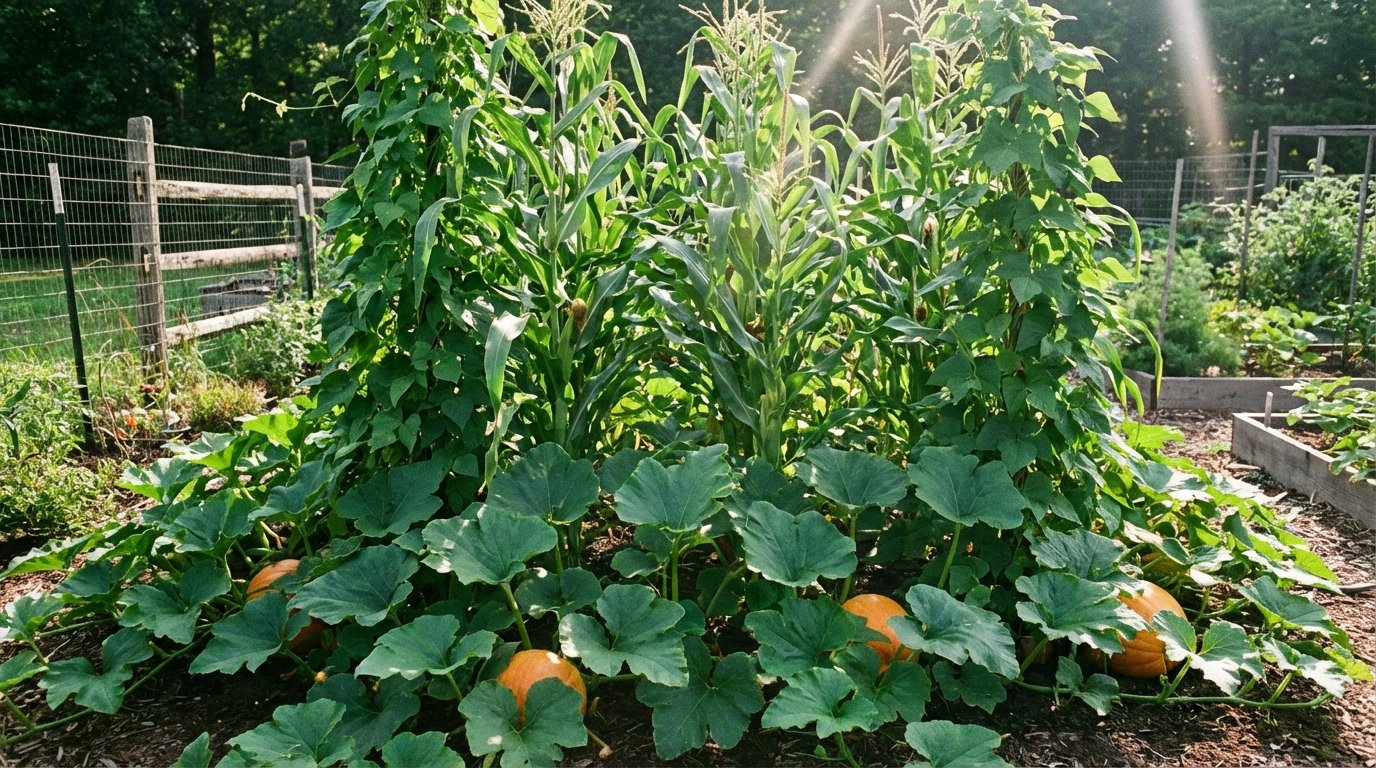
Long before modern agriculture, Indigenous peoples of North America developed the most elegant companion planting system ever designed: the Three Sisters. Corn (Zea mays), beans (Phaseolus vulgaris), and squash (Cucurbita spp.) aren't just planted together — they form a self-sustaining ecosystem:
- Corn provides a natural trellis for bean vines to climb, eliminating the need for stakes or poles. It needs massive amounts of nitrogen — which the beans provide.
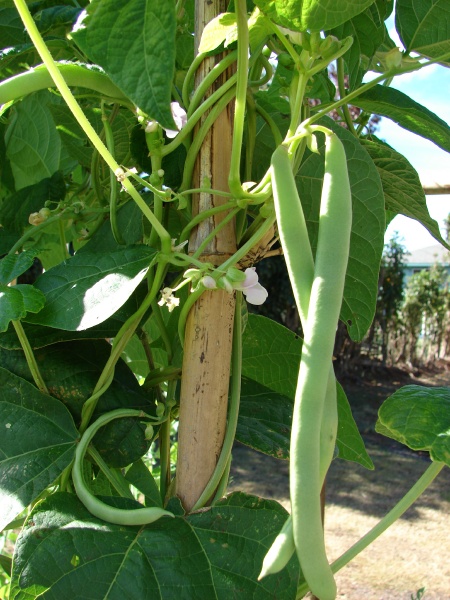
- Beans fix atmospheric nitrogen through Rhizobium bacteria in their root nodules, feeding the nitrogen-hungry corn and squash. In return, they get a climbing structure.
- Squash spreads its large, prickly leaves across the ground, creating living mulch that suppresses weeds, retains moisture, and deters raccoons and other ground-dwelling pests with its spiny stems.
How to plant the Three Sisters:
- Create mounds 4 feet (1.2 m) apart, about 12 inches (30 cm) high and 18 inches (45 cm) across.
- Plant 4-6 corn seeds in the center of each mound.
- When corn is 6 inches (15 cm) tall, plant 4 bean seeds around the corn, 6 inches (15 cm) away.
- At the same time, plant 2 squash seeds at the edge of the mound.
This system has been validated by modern agricultural research. A 2008 study in Agronomy Journal found that Three Sisters polyculture produced 20-30% more total food per acre than monoculture plantings of the same crops. Tendra's garden planner can help you map out Three Sisters mounds with proper spacing — just set your bed dimensions and let the AI suggest plant placement.
Companion Planting Vegetables: The Quick Reference
Need a fast answer? Here's a streamlined companion planting vegetables reference for the 15 most popular garden crops:
- Tomatoes → Plant with: basil, carrots, marigolds, parsley. Avoid: fennel, brassicas, dill (mature dill inhibits tomatoes).
- Peppers → Plant with: basil, tomatoes, carrots, onions. Avoid: fennel, kohlrabi.
- Cucumbers → Plant with: beans, corn, peas, radishes, sunflowers. Avoid: potatoes, aromatic herbs in excess.
- Beans (bush/pole) → Plant with: corn, squash, carrots, cucumbers. Avoid: onions, garlic, chives, fennel.
- Peas → Plant with: carrots, radishes, turnips, corn, beans. Avoid: onions, garlic.
- Carrots → Plant with: onions, leeks, rosemary, sage, lettuce. Avoid: dill (cross-pollinates, stunts growth).
- Lettuce → Plant with: carrots, radishes, strawberries, chives, garlic. Avoid: celery (same pest family).
- Squash/Zucchini → Plant with: corn, beans, nasturtiums, marigolds. Avoid: potatoes.
- Broccoli/Cauliflower → Plant with: onions, garlic, celery, dill, chamomile. Avoid: strawberries, tomatoes.
- Cabbage/Kale → Plant with: onions, dill, celery, nasturtiums. Avoid: strawberries, pole beans.
- Garlic → Plant with: tomatoes, roses, carrots, fruit trees. Avoid: beans, peas, asparagus.
- Onions → Plant with: carrots, beets, lettuce, brassicas. Avoid: beans, peas.
- Potatoes → Plant with: beans, corn, horseradish, marigolds. Avoid: tomatoes, squash, sunflowers.
- Corn → Plant with: beans, squash, peas, cucumbers, melons. Avoid: tomatoes (corn earworm = tomato fruitworm).
- Radishes → Plant with: peas, lettuce, cucumbers, carrots. Avoid: hyssop.
Bookmark this page for quick reference in the garden — it's designed to work as your go-to companion planting chart whenever you're planning beds or filling gaps.
Herb Companions: Your Garden's Best Pest Defense

Most companion planting charts focus exclusively on vegetables, but herbs are arguably the most powerful companions in your garden. Their essential oils confuse pest insects that navigate by scent, and many produce flowers that attract beneficial predators. Here's your herb companion guide:
- Basil (Ocimum basilicum): The ultimate tomato companion. Repels aphids, whiteflies, mosquitoes, and tomato hornworms. Plant 12-18 inches (30-45 cm) from tomato stems. Research-backed.
- Dill (Anethum graveolens): Attracts ladybugs, lacewings, and parasitic wasps — all voracious aphid predators. BUT keep mature dill away from carrots and tomatoes (inhibits their growth). Young dill is fine near tomatoes. Research-backed for beneficial insect attraction.
- Rosemary (Salvia rosmarinus): Repels cabbage moths, carrot rust flies, and bean beetles. Plant near brassicas and beans. Its woody structure also provides overwintering habitat for beneficial insects. Anecdotal but widely observed.
- Thyme (Thymus vulgaris): Repels cabbage worms and whiteflies. Its ground-hugging habit makes it excellent living mulch between rows. Partially research-backed — thymol compounds have documented insecticidal properties.
- Cilantro/Coriander (Coriandrum sativum): When flowering, attracts hoverflies, parasitic wasps, and tachinid flies that control caterpillar pests. Let some cilantro bolt — the flowers are more valuable than the leaves for pest control.
- Mint (Mentha spp.): Repels ants, flea beetles, and aphids. WARNING: Always grow mint in containers — it's aggressively invasive and will overtake your garden beds within one season. Place potted mint between vegetable rows.
- Chives (Allium schoenoprasum): Repel aphids and carrot rust fly. Excellent border plant for any bed. Their purple flowers attract pollinators in early spring when few other plants are blooming.
- Oregano (Origanum vulgare): General pest deterrent. University of British Columbia research found oregano's carvacrol compound repels aphids at concentrations found in living plants.
Flower Companions: Beauty That Works

Flowers aren't just decoration in a vegetable garden — they're functional pest management and pollination infrastructure. These three are essential additions to any companion planting strategy:
- Marigolds (Tagetes spp.): The most scientifically validated companion plant. French marigolds (T. patula) suppress root-knot nematodes for up to three years after planting. They also repel whiteflies and attract hoverflies. For maximum nematode control, grow marigolds as a cover crop for a full season before planting susceptible vegetables. Extensively research-backed — dozens of studies confirm nematode suppression.
- Nasturtiums (Tropaeolum majus): The classic trap crop. Aphids prefer nasturtiums over almost any vegetable, so these flowers sacrifice themselves to protect your real crops. They also repel squash bugs, cucumber beetles, and whiteflies. Both leaves and flowers are edible — a bonus. Plant them at bed edges and around cucurbits. Research-backed as trap crop.
- Borage (Borago officinalis): A pollinator powerhouse. Borage produces copious nectar that attracts bees, especially bumblebees critical for tomato and pepper pollination. It also repels tomato hornworms and cabbage worms. Old garden lore says it improves strawberry flavor and yield — while the flavor claim is unproven, research does show increased pollinator visits to nearby plants. Partially research-backed.
- Sweet alyssum (Lobularia maritima): Low-growing ground cover that attracts hoverflies and parasitic wasps. University of California research found that alyssum planted every 50 feet (15 m) in lettuce fields reduced aphid populations by 60%. Research-backed.
- Sunflowers (Helianthus annuus): Attract pollinators, provide shade for heat-sensitive crops, and serve as natural trellises for beans and cucumbers. Their deep taproots break up compacted soil and draw up nutrients from deep underground.
Companion Planting Enemies: What NOT to Plant Together

Knowing what to plant together is only half the equation. These combinations can stunt growth, increase disease, or even kill neighboring plants:
The Universal Enemies
- Fennel (Foeniculum vulgare): The garden pariah. Fennel secretes substances from its roots that inhibit growth in almost every vegetable — tomatoes, beans, peppers, and brassicas are all negatively affected. Grow fennel in its own isolated pot or a separate bed at least 10 feet (3 m) from your vegetable garden. Research-backed — allelopathic compounds confirmed.
- Black walnut trees (Juglans nigra): Produce juglone, a potent allelopathic compound that kills or stunts tomatoes, peppers, eggplant, potatoes, and many other crops. The toxin persists in soil for years. Don't plant nightshades within 50 feet (15 m) of black walnut trees — or use raised beds with imported soil. Extensively research-backed.
Specific Bad Pairings
- Dill + Carrots: Same family (Apiaceae) — mature dill cross-pollinates with carrots, producing bitter, unusable roots. Dill also stunts carrot growth through root competition.
- Beans/Peas + Onions/Garlic: Allium compounds inhibit the nitrogen-fixing Rhizobium bacteria that legumes depend on. Your beans will fix far less nitrogen and produce smaller yields.
- Tomatoes + Brassicas: Both are heavy calcium feeders. Planted together, they compete intensely, leading to blossom end rot in tomatoes and poor head formation in broccoli.
- Potatoes + Tomatoes: Both nightshades, both susceptible to late blight (Phytophthora infestans). Planting them together virtually guarantees disease spread between crops.
- Cucumbers + Aromatic Herbs: Strong herbs like sage and mint can inhibit cucumber growth. Keep them at the bed border, not interplanted directly in cucumber hills.
- Sunflowers + Potatoes: Sunflowers release allelopathic compounds that inhibit potato tuber formation.
From Chart to Garden: Putting Companion Planting Into Practice
Sarah from Portland transformed her 4x8-foot (1.2x2.4 m) raised bed using companion planting circles last spring. "I used to plant in single-crop rows like my grandmother did," she says. "When I switched to companion groupings — tomatoes with basil and marigolds in one section, brassicas with dill and onions in another — my aphid problems almost disappeared. I didn't spray a single thing all season." She used Tendra's community forums to connect with other Portland gardeners who shared their companion planting layouts, discovering that pairing her kale with nasturtiums eliminated the cabbage aphid problem that had plagued her for three years.
The key to successful companion planting is starting simple. Don't try to implement every pairing at once. Pick your three most important crops, find their best companions from this chart, and plan your beds around those groupings. As you gain experience, you'll develop an intuition for which plants "want" to grow together — and you'll notice the difference in pest pressure, pollination, and yield.
For planning help, Tendra's garden planner lets you map out companion circles visually, set spacing reminders, and connect with local gardeners who've tested these pairings in your specific climate zone. Because a companion planting chart is only as good as its local adaptation — what works in Zone 9 San Diego might need adjustment for Zone 5 Chicago.
Discover companion planting planning with Tendra — where local gardeners connect and thrive.