You've been scrolling through garden photos, watching those satisfying harvest reels, and telling yourself, "Next year, I'm doing it." Well, here's your real talk moment: the easiest vegetables to grow don't need a decade of experience, a perfectly tilled acre, or some inherited instinct. They need dirt, water, sunlight, and you — showing up. That's it. Whether you've got a sprawling backyard or a single pot on a fire escape, these ten crops will reward you with actual food, sometimes in as little as three weeks. This guide covers every beginner-friendly detail — days to harvest, difficulty ratings, the mistakes that trip up first-timers, and which ones thrive in containers for anyone short on space.

Why These 10 Crops Are the Easiest Vegetables to Grow
Not all vegetables are created equal when it comes to forgiving beginners. The crops on this list share a few critical traits: they germinate fast, tolerate imperfect watering, resist most common pests without intervention, and produce a meaningful harvest even when you make mistakes. Some can go from seed to plate in under a month. Others keep producing for months once they get going. Every single one of them has been grown successfully by people who have never touched soil before.
For each vegetable below, you'll find a difficulty rating (1–5 stars, with 1 being nearly impossible to fail), estimated days to harvest, the most common beginner mistake, and whether it works in containers. Let's get into it.
1. Leaf Lettuce — The Instant-Gratification Crop

Difficulty: ★☆☆☆☆ (1/5) · Days to harvest: 30–45 · Container-friendly: Yes
Lactuca sativa is the gateway crop. Scatter seeds over moist soil, press them down gently, and you'll see sprouts in 3–7 days. Loose-leaf varieties like 'Black Seeded Simpson' and 'Red Sails' let you start harvesting outer leaves in about a month while the plant keeps pushing new growth from the center. You can grow it in a windowsill planter, a raised bed, or a half-barrel on a patio.
Common beginner mistake: Planting in full, blazing summer heat. Once temperatures push past 80°F (27°C), most varieties bolt — sending up a bitter flower stalk and checking out. The fix is simple: plant in spring or fall, or give it afternoon shade during warm months. Succession sow every 2–3 weeks for a continuous supply.
2. Radishes — Seed to Salad in Three Weeks

Difficulty: ★☆☆☆☆ (1/5) · Days to harvest: 22–30 · Container-friendly: Yes
Raphanus sativus might be the single fastest vegetable you can grow. Varieties like 'Cherry Belle' and 'French Breakfast' can go from seed to crunchy, peppery root in just three weeks. They need at least 6 inches (15 cm) of soil depth and consistent moisture, but that's about the extent of their demands. They're also excellent "row markers" — plant them between slow-germinating crops like carrots so you can see where you planted.
Common beginner mistake: Leaving them in the ground too long. An overripe radish gets woody, pithy, and hot enough to clear your sinuses. Check them at three weeks by brushing away soil at the base — if you can see a root the size of a large marble, pull it. Don't wait.
3. Zucchini — The Overachiever You'll Beg to Stop Producing

Difficulty: ★★☆☆☆ (2/5) · Days to harvest: 45–55 · Container-friendly: Yes (large container, 5+ gallons / 19+ liters)
Cucurbita pepo is the vegetable that launched a thousand "please take my zucchini" jokes for a reason — once it gets going, a single plant can produce 6–10 pounds (2.7–4.5 kg) of fruit per week. Plant seeds directly after your last frost date in rich, well-draining soil. Give it full sun and room to sprawl (3–4 feet / 0.9–1.2 m per plant). If space is tight, try compact bush varieties like 'Patio Star' in a large pot.
Common beginner mistake: Letting fruits get too big. A baseball-bat-sized zucchini is impressive to look at, but the flesh gets watery and seedy. Harvest at 6–8 inches (15–20 cm) for the best flavor and texture, and pick regularly so the plant keeps producing.
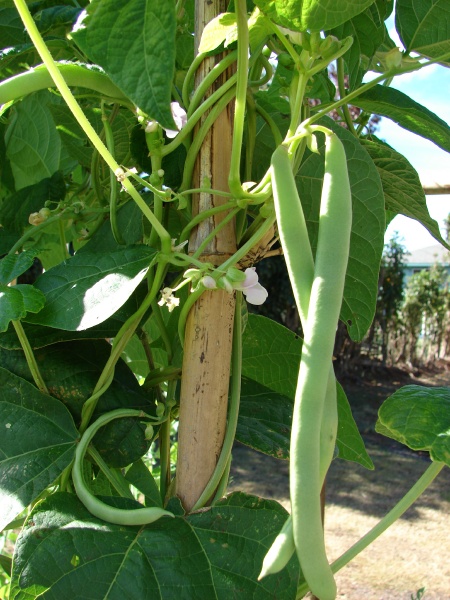
4. Green Beans — Low Maintenance, High Reward

Difficulty: ★★☆☆☆ (2/5) · Days to harvest: 50–60 · Container-friendly: Yes (bush types)
Phaseolus vulgaris comes in two styles: bush beans that stay compact and pole beans that climb. For your beginner vegetable garden, start with bush varieties like 'Provider' or 'Contender' — they don't need a trellis, they produce heavily over a 2–3 week window, and they fix nitrogen in the soil, actually improving it for whatever you plant next. Direct-sow seeds 1 inch (2.5 cm) deep after the soil warms to at least 60°F (16°C).
Common beginner mistake: Planting too early in cold soil. Bean seeds rot fast in cool, wet ground. Wait until the soil is truly warm (stick your hand in — if it's uncomfortable, it's too cold for beans). Another surprise for beginners: pick beans when they're pencil-thin and snap easily. Waiting for the seeds to bulge inside the pod means you've hit the tough, stringy stage.
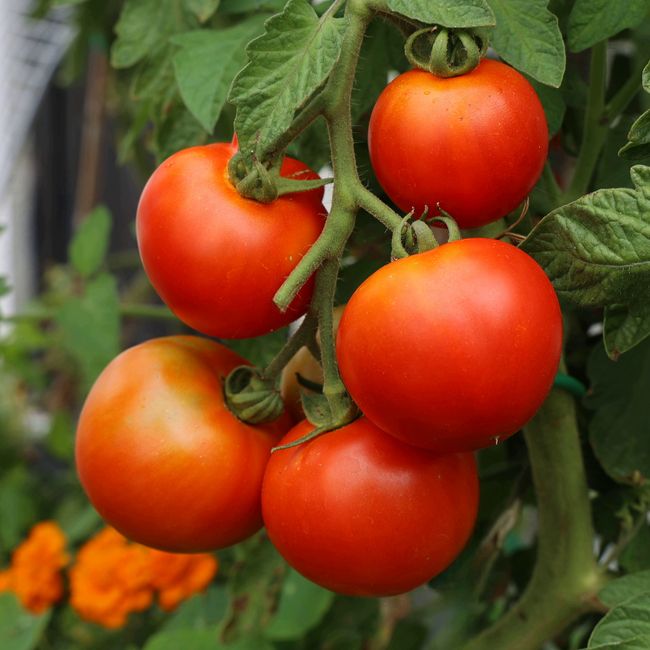
5. Cherry Tomatoes — The Gateway to Tomato Obsession

Difficulty: ★★☆☆☆ (2/5) · Days to harvest: 55–70 · Container-friendly: Yes
Solanum lycopersicum var. cerasiforme is where most new gardeners catch the bug — there's nothing quite like eating a sun-warmed cherry tomato straight off the vine. Start with disease-resistant varieties like 'Sun Gold' (the sweetest you'll ever eat), 'Sweet 100', or 'Juliet'. Buy transplants instead of starting from seed for your first year — it cuts 6–8 weeks off the timeline. Give each plant a cage or stake, full sun (8+ hours), and consistent water.
Common beginner mistake: Inconsistent watering. Letting the soil dry out and then flooding it causes blossom end rot (dark, leathery patches on the bottom of the fruit) and cracking. Water deeply 2–3 times per week rather than a light sprinkle every day. Mulch around the base with 2–3 inches (5–8 cm) of straw to hold moisture and keep soil off the lower leaves.
If you're growing in containers, a 5-gallon (19-liter) pot works for determinate varieties, but indeterminate types do better in 10–15 gallons (38–57 liters). The Tendra app's care reminder system can help you stay on a consistent watering schedule — set it once and let it ping you when it's time.
6. Basil — The Herb That Doubles as Pest Control

Difficulty: ★☆☆☆☆ (1/5) · Days to harvest: 21–30 (first leaves) · Container-friendly: Yes
Ocimum basilicum is the companion planting MVP. Plant it near your tomatoes and it helps repel aphids and whiteflies while attracting pollinators with its flowers. 'Genovese' is the classic for Italian cooking, but 'Thai' basil holds up better in heat and 'Lemon' basil is outrageously fragrant. Start from transplants or direct-sow once nighttime temps stay above 50°F (10°C).
Common beginner mistake: Letting it flower. Once basil bolts and produces flowers, the leaves turn bitter and the plant starts winding down. The fix: pinch off any flower buds the moment you see them, and regularly harvest the top sets of leaves. This forces the plant to branch out and produce more foliage. One plant, properly pinched, will produce all summer.
7. Cucumbers — Cool, Crisp, and Surprisingly Easy

Difficulty: ★★☆☆☆ (2/5) · Days to harvest: 50–65 · Container-friendly: Yes (with trellis)
Cucumis sativus thrives in warm weather and rewards you with an almost absurd amount of fruit. Bush varieties like 'Spacemaster' fit in a large container, while vining types climb a trellis and save ground space in a small garden. Either way, they want full sun, warm soil, and about 1 inch (2.5 cm) of water per week. Feed them with a balanced fertilizer when flowers appear.
Common beginner mistake: Not picking often enough. A cucumber that's gone yellow and seedy on the vine signals the plant to slow down production. Check daily once they start fruiting and harvest at 6–8 inches (15–20 cm) for slicing types, or 2–4 inches (5–10 cm) for pickling varieties. The more you pick, the more the plant produces.
8. Kale — The Crop That Laughs at Cold Weather

Difficulty: ★☆☆☆☆ (1/5) · Days to harvest: 50–65 · Container-friendly: Yes
Brassica oleracea var. sabellica is a cold-weather powerhouse. While your tomatoes and beans surrender to the first frost, kale keeps going — and actually tastes better after a freeze, because the plant converts starches to sugars as a natural antifreeze. Varieties like 'Winterbor' and 'Red Russian' can survive temperatures down to 10°F (–12°C). Start it in late summer for a fall and winter harvest, or in early spring for a pre-summer crop.
Common beginner mistake: Harvesting wrong. Don't yank the whole plant. Instead, pick the lower, outer leaves and leave the central growing point intact. The plant keeps producing new leaves from the top for months. Start harvesting when leaves reach about the size of your hand. In raised beds, plant kale 18 inches (45 cm) apart for good air circulation.
9. Swiss Chard — The Gorgeous Workhorse

Difficulty: ★☆☆☆☆ (1/5) · Days to harvest: 50–60 · Container-friendly: Yes
Beta vulgaris subsp. vulgaris is one of the most underrated easy crops to grow. 'Bright Lights' and 'Rainbow' varieties produce jewel-toned stems in red, orange, yellow, pink, and white — they're gorgeous enough to plant in a flower bed. But they're also tough as nails. Chard tolerates heat better than spinach, handles light frost, and keeps producing for months through cut-and-come-again harvesting.
Common beginner mistake: Ignoring it because "I don't know how to cook chard." Fair, but it's simpler than you think: sauté the stems first (they take longer), then add the leaves. Treat the leaves like spinach in any recipe. Nutritionally, it's packed with vitamins A, C, and K. In the garden, direct-sow seeds 2 inches (5 cm) apart, thin to 8–12 inches (20–30 cm), and keep the soil consistently moist.
10. Garlic — Plant It and Forget It (Almost)

Difficulty: ★★☆☆☆ (2/5) · Days to harvest: 240–270 (fall-planted) · Container-friendly: Possible (deep container, 8+ inches / 20+ cm)
Allium sativum is the most patient crop on this list, but it requires the least active work. In most zones, you plant individual cloves in mid-to-late fall, 2 inches (5 cm) deep with the pointy end up, mulch heavily, and walk away. The cloves establish roots before winter, push green shoots in early spring, and by midsummer you've got full, fragrant bulbs. Hardneck varieties like 'Music' and 'German Extra Hardy' produce edible scapes (curly flower stalks) as a bonus harvest in late spring.
Common beginner mistake: Using grocery store garlic. Most supermarket garlic is imported, treated to prevent sprouting, and may carry diseases. Buy seed garlic from a reputable supplier or, even better, use Tendra's Plant Exchange to find locally adapted varieties from growers in your area — they'll perform far better in your specific climate. Also, don't skimp on the mulch: 4–6 inches (10–15 cm) of straw or shredded leaves protects cloves from freeze-thaw cycles.
How Nick from New York Turned a Fire Escape Into a Vegetable Garden
Nick had exactly zero garden space — a fifth-floor apartment in Brooklyn with a south-facing fire escape and two sunny windows. He started with three 12-inch (30 cm) containers: one with lettuce and radishes (fast wins), one with cherry tomatoes on a small cage, and one with basil and a single chard plant. His total investment was under $40.
"I genuinely thought I'd kill everything within a week," Nick told a friend in his Tendra local gardening group. "But the radishes came up in four days. Four. I was checking on them every morning before work like they were pets." By June, he was harvesting salad greens twice a week. The cherry tomatoes started ripening in July and didn't stop until October. The basil went into weekly pasta and frozen pesto cubes. Even the chard, which he'd planted "because the stems were pretty," ended up in his regular dinner rotation.
Nick's container setup worked because he chose vegetables for new gardeners — crops that tolerate the constraints of small spaces and imperfect conditions. He's since expanded to six containers and added cucumbers on a small trellis. "The fire escape looks ridiculous now," he says. "But I ate a tomato I grew five stories up, and honestly, that's a core memory."
Quick-Reference Chart: All 10 at a Glance
- Lettuce — Difficulty: 1/5 · Harvest: 30–45 days · Container: Yes · Best season: Spring/Fall
- Radishes — Difficulty: 1/5 · Harvest: 22–30 days · Container: Yes · Best season: Spring/Fall
- Zucchini — Difficulty: 2/5 · Harvest: 45–55 days · Container: Yes (5+ gal) · Best season: Summer
- Green Beans — Difficulty: 2/5 · Harvest: 50–60 days · Container: Yes (bush) · Best season: Summer
- Cherry Tomatoes — Difficulty: 2/5 · Harvest: 55–70 days · Container: Yes · Best season: Summer
- Basil — Difficulty: 1/5 · Harvest: 21–30 days · Container: Yes · Best season: Summer
- Cucumbers — Difficulty: 2/5 · Harvest: 50–65 days · Container: Yes (w/ trellis) · Best season: Summer
- Kale — Difficulty: 1/5 · Harvest: 50–65 days · Container: Yes · Best season: Fall/Winter
- Swiss Chard — Difficulty: 1/5 · Harvest: 50–60 days · Container: Yes · Best season: Spring–Fall
- Garlic — Difficulty: 2/5 · Harvest: 240–270 days · Container: Possible · Best season: Plant Fall, Harvest Summer
Container Gardening: What Works in Pots
Every crop on this list can grow in containers, which makes this the perfect beginner vegetable garden for apartment dwellers, renters, and anyone with limited yard space. Here's what you need to know:
- Minimum pot sizes: Lettuce, radishes, herbs → 8–12 inches (20–30 cm). Beans, chard, kale → 12–16 inches (30–40 cm). Tomatoes, zucchini, cucumbers → 5–15 gallons (19–57 liters).
- Drainage is non-negotiable. Every container needs holes in the bottom. No exceptions. Sitting water = root rot = dead plants.
- Use potting mix, not garden soil. Garden soil compacts in containers and drains poorly. A quality potting mix stays fluffy and holds moisture without waterlogging.
- Containers dry out faster than garden beds. Check moisture daily — stick your finger an inch into the soil. Dry? Water deeply until it runs out the drainage holes.
If you're setting up your first container garden, start with the four easiest: lettuce, radishes, basil, and cherry tomatoes. That combination gives you salads with herbs and tomatoes in under two months.
Watering Without Overthinking It
The number-one killer of beginner gardens isn't pests, disease, or bad soil — it's inconsistent watering. Either too much or too little, or wildly swinging between both. Here's the simplified version:
- Most vegetables need about 1 inch (2.5 cm) of water per week, whether from rain or your hose.
- Water deeply and less frequently rather than a light sprinkle every day. Deep watering encourages roots to grow down, making plants more drought-resistant.
- Water the soil, not the leaves. Wet foliage invites fungal diseases. Use a watering can at the base or a soaker hose.
- Mulch everything with 2–3 inches (5–8 cm) of straw, shredded leaves, or wood chips. It retains moisture, suppresses weeds, and regulates soil temperature.
For a deeper dive on getting your watering routine dialed in, check out our complete guide.
Start Small, Start Now
The best beginner vegetable garden isn't the biggest one — it's the one you actually plant. Pick two or three crops from this list, grab some seeds or transplants from a local nursery, and get something in the ground (or in a pot) this weekend. You don't need to master all ten at once. Lettuce and radishes alone can give you your first harvest in under a month, and that first bite of something you grew yourself rewires your brain a little. Suddenly you're thinking about what to plant next season, whether you need a bigger pot, and where the sunniest spot in your yard really is.
That's how it starts. One seed, one pot, one radish pulled out of the dirt on a Tuesday morning.
Discover local gardeners growing these same crops in your neighborhood with Tendra — where local gardeners connect and thrive.