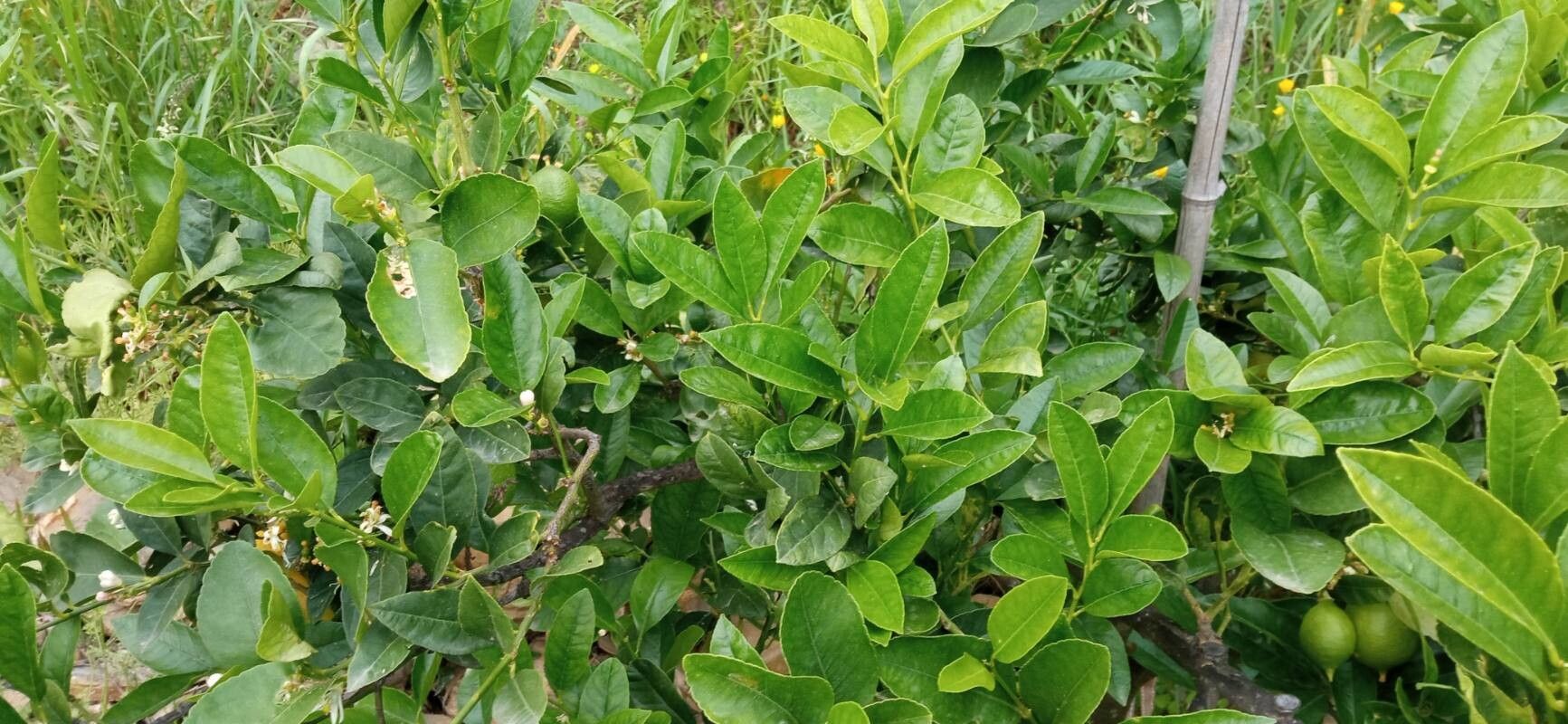
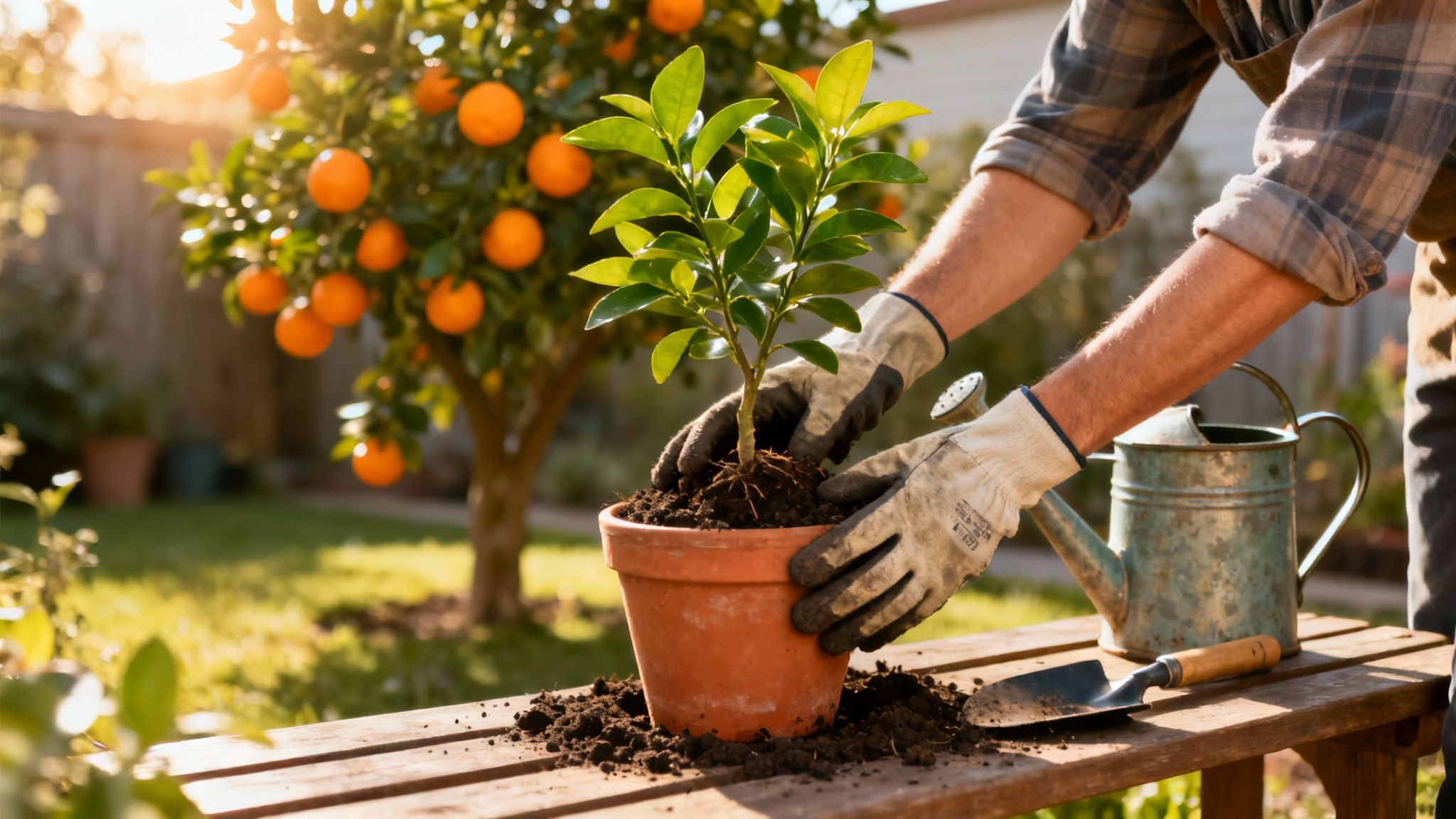
Few things hit quite like walking into your backyard and picking a ripe lemon straight off the branch. That burst of fragrance when you twist the stem, the waxy skin still warm from the sun — it's the kind of moment that makes you wonder why you didn't plant one years ago. If you've been thinking about how to grow citrus, this is your sign. Whether you've got a quarter-acre in Zone 10 or a sunny apartment window in Chicago, there's a citrus tree that wants to live with you.
Citrus trees belong to the family Rutaceae and the genus Citrus, a group that originated in Southeast Asia and has been cultivated for thousands of years. Today's home growers have access to dozens of cultivars — from cold-hardy mandarins to compact dwarf trees that fruit indoors. The key is matching the right variety to your climate, your space, and your patience. Because here's the honest truth: citrus tree care rewards the grower who understands the fundamentals, not the one chasing shortcuts.
How to Grow Citrus: Choosing the Right Varieties
Before you buy a single tree, you need to answer two questions: What do you actually want to eat? And what will your climate support? The answers narrow your options fast.
Lemons: The Workhorse of Home Citrus

Growing a lemon tree is many gardeners' entry point into citrus, and for good reason. Lemons are among the most productive and forgiving of the group. Two varieties dominate the home garden:
- Improved Meyer Lemon (Citrus × meyeri) — A cross between a lemon and a mandarin orange, the Meyer produces rounder, thinner-skinned fruit with a sweeter, less acidic flavor than grocery store lemons. It's the most popular home citrus tree in America, and it earns that spot. Cold-hardy to about 20°F (−7°C) with protection, productive in containers, and almost everbearing in mild climates. The "Improved" designation means it's been certified virus-free — always buy this version.
- Eureka Lemon (Citrus limon 'Eureka') — This is the classic supermarket lemon: oblong, thick-skinned, bracingly tart. Eureka produces fruit year-round in coastal California and similar climates. It's a bigger tree than Meyer (up to 20 feet/6 meters unpruned) but takes well to pruning. Less cold-tolerant than Meyer — reliable outdoors only in USDA Zones 9–11.
For most home growers, the Meyer is the better pick. It handles containers well, fruits younger (often within two years of purchase), and tastes phenomenal.
Limes: Small Fruit, Big Flavor

Limes are tropical at heart and the least cold-tolerant of the common citrus. But if you can give them warmth, they'll give you fruit nonstop.
- Key Lime (Citrus × aurantiifolia) — Also called Mexican lime or West Indian lime. Small, round, intensely aromatic fruit with thin skin and lots of seeds. The flavor is sharper and more complex than Persian lime — essential for real Key lime pie. Trees are thorny, compact (6–13 feet/2–4 meters), and very frost-sensitive. Best in Zones 10–11, or in containers brought indoors for winter.
- Persian Lime (Citrus × latifolia) — The standard supermarket lime. Larger, seedless, thicker-skinned, and slightly more cold-tolerant than Key lime. Trees reach 15–20 feet (4.5–6 meters) unpruned. Great for cocktails, cooking, and anyone who wants consistent production without dodging thorns.
Oranges: Worth the Wait

Oranges need more heat and more patience than lemons or limes, but the payoff is worth it. Home-grown oranges taste nothing like the ones sitting in a warehouse for weeks.
- Valencia Orange (Citrus sinensis 'Valencia') — The premier juicing orange. Fruit ripens in summer, which is unusual for citrus (most ripen winter through spring). Trees are vigorous growers reaching 30–40 feet (9–12 meters) in the ground without pruning. Outstanding flavor with high sugar content.
- Cara Cara Navel (Citrus sinensis 'Cara Cara') — A navel orange mutation with pink-red flesh and a distinctive berry-like sweetness. Lower acidity than standard navels. Excellent eaten fresh. Ripens December through April in most areas.
- Blood Orange (Citrus sinensis cultivar group) — Varieties like 'Moro', 'Tarocco', and 'Sanguinello' produce fruit with deep crimson flesh. The anthocyanin pigments responsible for the color develop best with cool nights — making blood oranges ideal for Mediterranean and coastal climates. 'Moro' is the most intensely colored and widely available.
Outdoor vs. Indoor Citrus Growing: Where Will Your Tree Live?
This is the single most important decision you'll make. It determines variety selection, container choice, soil mix, and your entire care routine.
Growing Citrus Outdoors (Zones 9–11)
If you live in USDA Hardiness Zones 9 through 11 — most of California, the Gulf Coast, Florida, Arizona, and parts of Texas — you can grow citrus in the ground year-round. This is where citrus is happiest: full sun, warm soil, room to spread roots.
In-ground trees produce more fruit, grow faster, and need less fussing than container trees. They're also more drought-tolerant once established, since their root systems can reach deep into the soil profile. A mature in-ground lemon tree can produce 100–200 pounds (45–90 kg) of fruit per year.
The tradeoff: you're committed. An in-ground citrus tree is a long-term landscape feature. Choose your planting location carefully — you want full sun (8+ hours daily), protection from cold north winds, and well-draining soil.
Indoor Citrus Growing and Container Culture

If you're north of Zone 9, indoor citrus growing is your path. And it genuinely works — Sam from San Diego started his citrus collection with a single Improved Meyer lemon in a 15-gallon (57-liter) pot on his apartment balcony. That was four years ago. He's now growing six trees in containers, rotating them between his south-facing patio and a sunroom during the cooler months, and pulling enough lemons and limes to keep his kitchen stocked year-round.
"The first year was a learning curve," Sam told us. "I overwatered constantly, and my Meyer dropped every flower it set. Once I switched to a chunky, fast-draining soil mix and backed off the watering, it exploded. I got 30 lemons off that tree the second year." Sam now uses Tendra's citrus cultivar database to compare rootstock options and cold tolerance ratings before buying new trees — a move he says has saved him from two bad purchases.
For container culture, choose dwarf or semi-dwarf varieties grafted onto dwarfing rootstock like Flying Dragon (Poncirus trifoliata). The best container citrus trees include:
- Improved Meyer Lemon — hands down the best indoor producer
- Key Lime — compact, prolific, and fragrant
- Calamondin Orange (Citrus × microcarpa) — ornamental and edible, very cold-tolerant
- Kumquat (Citrus japonica) — technically citrus-adjacent, but cold-hardy and eats well
Use a minimum 15-gallon (57-liter) container with drainage holes. Half-barrel planters, fabric grow bags, and glazed ceramic pots all work. Avoid black plastic in hot climates — roots cook. If you're new to growing food in pots, our container gardening for beginners guide covers the fundamentals.
Sun, Soil, and Water: The Citrus Care Fundamentals
Sunlight Requirements
Citrus trees are full-sun plants. Period. They need a minimum of 6 hours of direct sunlight daily, and 8–12 hours is better. This is non-negotiable — insufficient light causes leggy growth, flower drop, and bland fruit.
For indoor trees, place them in the brightest window you have (south-facing in the Northern Hemisphere). If natural light falls short — and it usually does during northern winters — supplement with a full-spectrum LED grow light. Run it 12–14 hours daily, positioned 6–12 inches (15–30 cm) above the canopy.
Soil and Drainage
Citrus roots absolutely cannot sit in waterlogged soil. Root rot from overwatering kills more home citrus trees than frost, pests, and neglect combined.
For in-ground planting, citrus prefers slightly acidic soil (pH 6.0–7.0) with excellent drainage. Sandy loam is ideal. Heavy clay? Amend heavily with organic matter and consider planting on a mound or raised bed to improve drainage.
For containers, skip the bagged "potting soil" — most are too dense. Mix your own:
- 5 parts pine bark fines (½-inch/1.3 cm screened)
- 3 parts perlite
- 1 part peat moss or coconut coir
- 1 part compost
This creates a fast-draining, well-aerated mix that mimics the loose, sandy soils citrus thrives in naturally. Re-pot every 2–3 years, stepping up one container size.
Watering Citrus Trees
The golden rule: water deeply, then let the top 2–3 inches (5–8 cm) of soil dry before watering again. Citrus wants consistent moisture at the root zone but oxygen around the roots between waterings.
In-ground trees: deep soak once or twice per week in summer, less in winter. Established trees (3+ years in the ground) are moderately drought-tolerant but produce better fruit with consistent irrigation.
Container trees: water when the top 2 inches (5 cm) feel dry. In summer heat, this might be every 2–3 days. In winter indoors, once a week or less. Always water until it runs out the drainage holes.
Fertilizing Citrus Trees: Feed Them Right
Citrus are heavy feeders with specific nutritional needs. Generic "all-purpose" fertilizer won't cut it — they need a citrus-specific formula with extra nitrogen, plus micronutrients like iron, manganese, and zinc.
Look for a fertilizer labeled for citrus and avocado (similar to what you'd use when growing avocado trees). The NPK ratio should be roughly 2-1-1 or 3-1-1, with added micronutrients. Good options include:
- Granular slow-release: Apply in early spring (February–March), late spring (May), and late summer (August) for in-ground trees. Follow package rates.
- Liquid fertilizer: Great for container trees. Apply every 2–4 weeks during the growing season (spring through early fall). Dilute to half strength if the tree is young.
- Organic options: Blood meal (nitrogen), bone meal (phosphorus), kelp meal (micronutrients), and composted manure all work. Apply as a top-dress in spring and midsummer.
Stop fertilizing by October in most climates. Late-season fertilization pushes tender new growth that's vulnerable to frost damage.
Iron chlorosis — yellowing leaves with green veins — is the most common nutrient deficiency in citrus. It's usually caused by high soil pH locking out iron. Treat with chelated iron (EDDHA form) applied to the soil, and consider acidifying your irrigation water if you're on alkaline city water.
How to Grow Citrus Through Common Problems

Every citrus grower deals with problems eventually. Here's what to watch for and how to handle it:
Leaf Curl
Curling leaves on citrus usually signal one of three things: underwatering (leaves curl inward to conserve moisture), citrus leaf miner (Phyllocnistis citrella) damage (silvery trails visible inside curled leaves), or aphid infestation (new growth distorted and sticky). Check the undersides of leaves carefully before treating. For leaf miners, spinosad-based sprays work well. For aphids, a strong blast of water or insecticidal soap handles most cases.
Scale Insects
Scale are the tiny brown or white bumps that appear on stems and leaf undersides. They're sap-sucking insects that weaken trees and produce honeydew, which attracts sooty mold. Horticultural oil sprays (applied in early morning or evening to avoid leaf burn) are the standard treatment. For heavy infestations, systemic insecticides containing imidacloprid work but should be used as a last resort because they also affect pollinators.
Citrus Greening (Huanglongbing / HLB)
This is the big one. Citrus greening disease, caused by the bacterium Candidatus Liberibacter asiaticus and spread by the Asian citrus psyllid (Diaphorina citri), has devastated commercial citrus production in Florida and is spreading through Texas, Louisiana, and parts of California. There is no cure.
Symptoms include asymmetric yellowing of leaves (blotchy mottling, not uniform chlorosis), lopsided fruit that stays partially green, and general decline. If you suspect HLB, contact your state's agricultural extension office immediately. In the meantime, control psyllid populations with systemic insecticides and remove confirmed infected trees to protect neighboring citrus.
For home growers, the best defense is buying certified disease-free nursery stock and inspecting trees regularly for psyllid activity (look for the distinctive diagonal feeding posture on new flush growth).
Frost Damage
Light frost (28–32°F / −2–0°C) damages leaves and small branches. Hard frost (below 28°F / −2°C) can kill scaffold branches or entire trees. Protection strategies:
- Plant on the south side of buildings or walls that radiate stored heat
- String incandescent holiday lights through the canopy (they generate enough heat to raise temperatures 2–3°F)
- Cover with frost cloth (not plastic, which conducts cold to leaves on contact)
- Container trees: bring indoors when overnight temps drop below 35°F (2°C)
Indoor Citrus Growing: Winter Care That Actually Works
Getting citrus through winter indoors is the biggest challenge for growers outside the Sunbelt. The tree doesn't go fully dormant — it slows down but still needs light, some water, and the right environment.
Bring container trees indoors before nighttime temperatures regularly hit 40°F (4°C). Place them in the brightest spot you have. South-facing windows with supplemental LED grow lights are the gold standard.
Humidity is critical. Indoor winter air often drops to 20–30% relative humidity, and citrus wants 50%+. Without adequate humidity, you'll see leaf drop, spider mites, and poor flower set. Run a humidifier near your trees, group plants together (they create a microclimate), or set pots on trays of wet pebbles.
Reduce watering frequency — the tree is growing slower and evaporation is lower indoors. Overwatering in winter is the number-one killer of indoor citrus. Water only when that top 2 inches (5 cm) is dry.
Stop fertilizing from November through February. Resume with a dilute liquid feed when you see new spring growth emerging.
Watch for spider mites — they thrive in dry indoor air. Fine webbing on leaf undersides is the telltale sign. Treat with insecticidal soap or neem oil, and boost humidity to make the environment less hospitable.
How Long Until Your Citrus Tree Bears Fruit?
This is the question everyone asks first. The honest answer depends on several factors:
- Grafted trees from a nursery: Most produce fruit within 1–3 years of purchase. Dwarf Meyer lemons are among the fastest, often fruiting in their first or second year. Oranges are slower — expect 2–4 years for a meaningful crop.
- Seed-grown trees: 5–15 years to fruit, and the fruit may not match the parent. Not recommended unless you're growing rootstock or experimenting. Citrus from seed is a lesson in patience, not a shortcut to harvest.
- Container vs. in-ground: Container trees generally fruit earlier (the root restriction can actually trigger earlier flowering) but produce less volume. In-ground trees take longer to establish but eventually produce far more fruit.
To encourage fruiting, ensure the tree gets adequate sun, consistent fertilization during the growing season, and isn't stressed by drought or overwatering. Some growers report that a brief period of cooler temperatures (50–60°F / 10–16°C for a few weeks) helps trigger flowering in indoor trees — mimicking the mild winter the tree would experience outdoors.
Putting It All Together: Your Citrus Growing Plan
If you're just starting out, here's the playbook:
- Pick your variety. Improved Meyer lemon for first-timers. Period. It's forgiving, productive, and tastes incredible.
- Buy a grafted tree from a reputable nursery. Look for 2–3 year old trees on dwarf rootstock. Avoid big-box stores where trees may have sat neglected.
- Match your setup. In-ground if you're Zone 9–11. Container (15+ gallons / 57+ liters) if you're anywhere else. Fast-draining soil mix either way.
- Light, light, light. The sunniest spot you have. Supplement with grow lights indoors.
- Water smart. Deep and infrequent beats shallow and constant. Let the soil breathe between waterings.
- Feed consistently. Citrus-specific fertilizer, spring through early fall. Don't skip the micronutrients.
- Watch for trouble. Weekly leaf inspections catch problems early. Most citrus pests are manageable if you don't let them get ahead of you.
The beauty of citrus is that once you nail the basics, the trees largely take care of themselves. A mature, well-sited lemon tree is one of the most productive plants you can grow — requiring less ongoing input than a tomato patch while delivering hundreds of fruit per year. If you've been growing fig trees or other fruit trees, you already understand the rhythm: patient establishment, consistent care, then years of effortless harvest.
If you're exploring varieties and want to compare cold tolerance, flavor profiles, and rootstock compatibility side by side, Tendra's cultivar database lets you filter dozens of citrus cultivars by your zone, your growing conditions, and what you actually want to pick. It's like having a citrus nursery catalog that talks back — and connects you with local growers who've already tested what works in your climate.
Start with one tree. Learn its rhythms. Then expand. That's how every good citrus collection begins — and how every great garden grows. Discover what thrives in your zone with Tendra — where local gardeners connect and grow together.