No backyard? No problem. Container gardening for beginners is the fastest, least intimidating way to start growing real food — and you don't need a single square foot of lawn to do it. A sunny balcony, a fire escape, a windowsill, even a strip of pavement outside your apartment door will work. Pots level the playing field between suburban gardeners with raised beds and city dwellers whose "yard" is a 4×6 foot concrete rectangle four stories up.
Here's what surprises most first-time growers: a single 18 inch (45 cm) pot can easily produce 10 pounds of cherry tomatoes in a summer. Three herb pots on a windowsill will outlast a year of grocery store basil purchases. And once you understand the two or three rules that actually matter — pot size, soil, and water — you can stop guessing and start harvesting. This guide walks you through everything you need to launch a productive container garden this weekend, including a clear container size table, the easiest vegetables to start with, and the $30–50 starter kit that actually works.

Why Container Gardening for Beginners Beats Starting In-Ground
If you've never grown anything edible, starting in pots is objectively easier than breaking ground on a traditional bed. You control the soil, so you skip the headaches of clay, compaction, and soil-borne disease. You control the location, so you can chase the sun across your balcony or drag a tomato plant under cover when a late frost rolls in. And you control the scale — one pot is a weekend experiment, not a multi-season commitment.
Vegetable container gardening also shortens the feedback loop. Problems show up fast in pots — wilting, yellowing, stunted growth — which means you learn faster. Get a plant identification app like Tendra pointed at the leaves and you'll often diagnose the issue in seconds, long before it spreads across a 200 square foot bed.
A few more reasons containers are the right starting point:
- Lower upfront cost. A full starter kit runs $30–50, compared to $200+ for a raised bed build.
- Flexibility. Renting? Moving? Take your garden with you.
- Fewer pests. Elevated pots dodge a lot of slug, vole, and rabbit damage.
- Accessibility. Tabletop pots are gentle on knees and backs.
- Faster warm-up in spring. Pots heat up days before in-ground soil, extending your season on both ends.
The Container Size Table Every Beginner Needs
Pot size is the single biggest mistake new growers make. Too small, and plants bolt, stress, or die from dried-out soil. Too big is almost never a problem — just heavier and more expensive. The #1 killer of container vegetables isn't bugs or disease; it's a 6 inch pot trying to support a 4 foot tomato plant.
Print this table, tape it to your fridge, and match the pot to the crop before you buy a single seed:

Minimum Container Size by Crop
- Herbs (basil, parsley, chives, thyme, mint): 6–8 inch (15–20 cm) pot, 1 gallon (3.8 L)
- Lettuce & leafy greens (loose-leaf, spinach, arugula, kale): 8–12 inch (20–30 cm) pot, 2 gallon (7.6 L)
- Radishes, scallions, bush beans: 10–12 inch (25–30 cm), 3 gallon (11 L)
- Peppers & chili peppers (Capsicum annuum): 12–14 inch (30–35 cm), 5 gallon (19 L)
- Cherry tomatoes & determinate tomatoes (Solanum lycopersicum): 14–16 inch (35–40 cm), 7 gallon (26 L)
- Indeterminate tomatoes, eggplant: 18–20 inch (45–50 cm), 10 gallon (38 L)
- Cucumbers, zucchini, summer squash (Cucurbita pepo): 20–24 inch (50–60 cm), 15 gallon (57 L)
- Potatoes: 24 inch (60 cm) deep grow bag, 15–20 gallon (57–76 L)
A simple rule of thumb: if it grows taller than your knee, it needs a pot bigger than a basketball. Fabric grow bags are an excellent cheat code here — they're lightweight, drain well, air-prune roots, and cost a fraction of ceramic.
Apartment and Balcony Container Garden Ideas
Growing food on a balcony introduces three constraints that backyard gardeners never think about: weight, drainage, and wind. Ignore any of these and you'll either lose plants or, worse, annoy your downstairs neighbor.
Weight: Know Your Balcony Limits
Most residential balconies are engineered for roughly 40–60 pounds per square foot (195–290 kg/m²) of live load — but that's the floor, not a concentrated point. A saturated 18 inch ceramic pot full of wet soil and a mature tomato can weigh 70–100 pounds (32–45 kg). Multiply that by five pots and you're in the danger zone.
Beginner moves that cut weight in half:
- Use fabric grow bags instead of ceramic or terracotta.
- Mix your potting mix with perlite or coconut coir (lighter and better drainage).
- Spread heavy pots along the railing edge directly above the support beams, never concentrated in the middle.
- Choose shallow, wide containers over tall deep ones for greens and herbs.
Drainage: Do Not Skip This
Every pot you use needs drainage holes. Every single one. If there's no hole, water collects at the bottom, roots suffocate, and the plant dies in a week. On a balcony, pair each pot with a saucer to keep runoff from staining the concrete (and the balcony below yours). A 1 inch (2.5 cm) layer of gravel under the saucer lets the pot bottom breathe between waterings.
Wind: The Silent Killer at Height
At a fourth floor balcony, wind speeds can be 20–30% higher than at street level. Wind desiccates leaves, topples tall plants, and dries pots twice as fast as a protected patio. Solutions: cluster pots together (they shade and shelter each other), stake tomatoes heavily from day one, and place the tallest plants behind a windbreak like a trellis panel or a wall of trailing herbs.
Self-Watering Containers: The Beginner's Secret Weapon
Inconsistent watering is the #1 cause of beginner container failures. You forget for two days, come home to a wilted zucchini, soak it, and cook the roots by overcompensating. A self-watering container — basically a pot with a built-in water reservoir below a perforated shelf — fixes this almost entirely.

Here's why they're magic for first-time growers:
- 3–7 days of reserve: You can leave town for the weekend without arranging a plant sitter.
- Wicking action: Plants pull up exactly as much water as they need, reducing both over- and under-watering.
- Fewer nutrients washed away: Conventional pots drain fertilizer out the bottom; self-waterers recirculate.
- Better yields: Studies from university extension programs consistently show 20–30% higher tomato yields in self-watering setups versus traditional pots.
You don't have to buy a fancy $80 planter. You can build a self-watering container for about $6 with two plastic storage bins, a piece of PVC pipe, and a drill. Search for "sub-irrigated planter DIY" and you'll find a dozen tutorials. For beginners who just want something that works out of the box, EarthBox, GrowBox, and the IKEA BITTERGURKA are all solid picks.
Potting Mix vs. Garden Soil: Why It Matters
If you take only one piece of advice from this guide, make it this: never, ever put bagged "garden soil" or "topsoil" in a container. This is the single most common beginner mistake, and it will kill your plants reliably.

The reason is physics. Garden soil is dense and compacts when watered in a confined container. Once compacted, water can't infiltrate, air can't reach the roots, and the plant slowly drowns and suffocates at the same time. Soil that would drain beautifully in a 20 foot wide bed turns into wet concrete in a 12 inch pot.
Real potting mix is engineered to stay airy and well-draining in pots. It typically contains:
- Peat moss or coconut coir: holds moisture without compacting
- Perlite: the little white rocks; they create air pockets
- Vermiculite: retains water and nutrients
- Compost or aged bark: slow-release nutrients
- No actual soil: hence the technical name "soilless mix"
Any bag labeled potting mix, container mix, or premium potting soil will work. Avoid anything called "garden soil," "topsoil," or "raised bed soil" (those belong in the ground). Budget tip: a 2 cubic foot (57 L) bag of quality potting mix costs $15–20 and fills three to four medium pots.
The $30–50 Container Garden Starter Kit
Garden centers will happily sell you $300 worth of gear you don't need. Here's the stripped-down list that actually gets you eating home-grown salad in 4–6 weeks:
- 3 fabric grow bags (5, 7, and 10 gallon) — $12 for a set
- 1 bag quality potting mix, 2 cubic feet — $18
- 1 bottle liquid all-purpose fertilizer (look for 10-10-10 or fish emulsion) — $8
- Seed packets or 3 starter plants from a local nursery — $6–12
- 1 small watering can (any will do, even a repurposed milk jug) — $0–5
Total: around $44 for a setup that will feed you fresh tomatoes, peppers, and salad greens all summer. What you don't need yet: a rain gauge, a $40 trowel set, pH strips, specialty tomato cages, or any of the five different fertilizer formulas a big-box store will push on you.
5 Best Vegetables to Grow in Pots (Ranked by Success Rate)
These are the best vegetables to grow in pots for absolute beginners, ranked by how forgiving they are and how quickly they reward you with something to harvest:

- Loose-leaf lettuce (Lactuca sativa) — Success rate: ~95%. Ready in 30 days. Pick outer leaves and it keeps producing. Happy in a 10 inch pot and tolerates partial shade.
- Herbs: basil, parsley, chives, mint — ~90%. Almost impossible to kill if you give them sun and don't overwater. One 8 inch pot per herb.
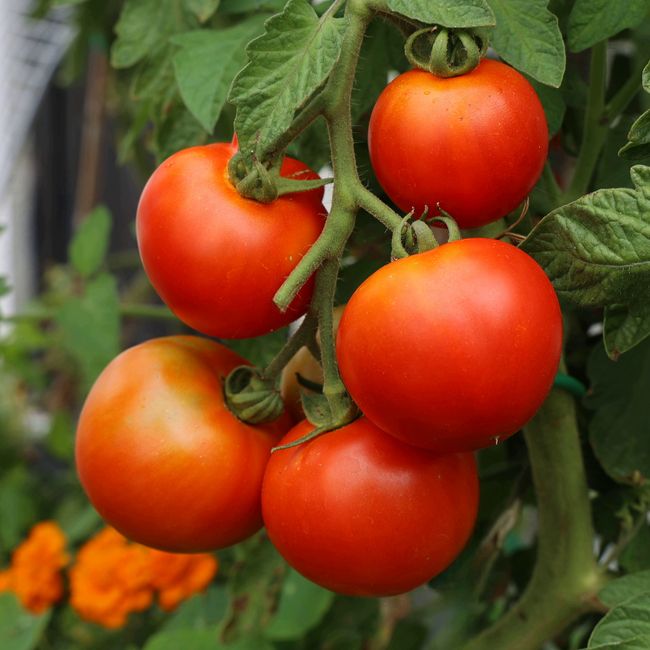
- Cherry tomatoes (Solanum lycopersicum 'Sungold', 'Sweet 100', 'Tumbling Tom') — ~85%. High-reward. Need a big pot (14 inch minimum), a stake, and 6+ hours of direct sun. See our full tomato growing guide for variety picks.
- Peppers (Capsicum annuum) — ~80%. Love heat and pots. Bell peppers, jalapeños, and shishitos all do great in a 12–14 inch container.
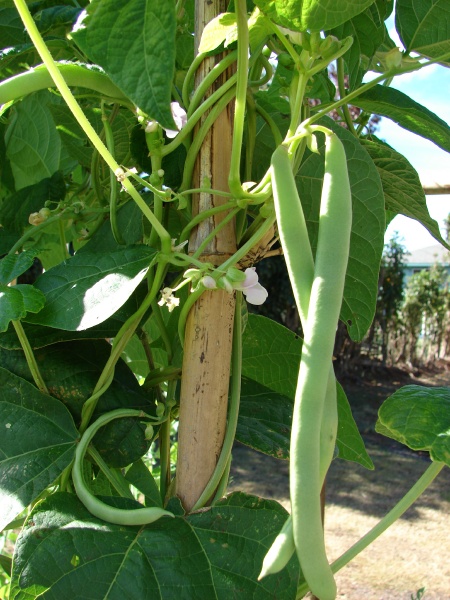
- Bush green beans (Phaseolus vulgaris) — ~80%. Skip pole beans for now. Bush varieties fit a 10 inch pot and produce in 50 days.
Three Unexpected Container Crops Worth Trying
Once you've had a win with the basics, consider these unusual picks that thrive in containers but rarely show up in beginner guides:
- Malabar spinach (Basella alba) — A heat-loving vining green that laughs at the summer heat that bolts regular spinach. Grow it up a trellis in a 14 inch pot.
- Ginger (Zingiber officinale) — Buy a knob from the grocery store, plant it in a wide shallow pot, and you'll have homegrown ginger in 8–10 months. Weirdly satisfying.
- Sweet potatoes (Ipomoea batatas) — Yes, really. In a 20 inch fabric grow bag, one slip will produce 3–5 pounds of tubers while the vines cascade decoratively over the edge.
Vertical Container Garden Ideas for Small Spaces
Floor space is limited. Vertical space usually isn't. Going up is how urban gardeners turn a 4×6 foot balcony into a 40 square foot growing area.

Container garden ideas that stretch your vertical footprint:
- Stacking strawberry pots: Multi-tiered ceramic towers with pockets for 8–12 plants. Work for strawberries, leaf lettuce, and trailing herbs.
- Hanging baskets: Perfect for cherry tomatoes, strawberries, trailing nasturtiums, and bush beans. Hook them on railings or shepherd's hooks.
- Wall-mounted pocket planters: Fabric "shoe organizer" style planters mount on fences and fill with herbs, greens, and small flowers.
- Trellis + pot combos: A single large pot with a bamboo A-frame or cattle panel arch supports cucumbers, pole beans, or indeterminate tomatoes growing straight up.
- Tiered plant shelves: A cheap three-tier wire plant stand holds nine small pots in the footprint of a dinner plate.
- Upside-down tomato planters: Divisive but effective for saving floor space if you have a sturdy ceiling hook.
If the sun moves across your space during the day, install your tallest plants on the north side so they don't shade out the shorter ones. And for darker corners where nothing edible seems to thrive, consider rotating in low-maintenance foliage — our guide to pothos care covers one of the most shade-tolerant indoor companions you can pair with a sunny balcony setup.
Watering, Feeding, and the First Two Weeks
Container plants dry out faster than in-ground plants — usually 2–3× faster — because their root zone is small and exposed on all sides. In peak summer, that means daily watering for most pots, sometimes twice a day for small herbs in direct sun.
The finger test beats any moisture meter: push a finger one inch (2.5 cm) into the soil. Dry? Water. Damp? Wait. Water until it runs out the drainage holes, then stop. Shallow sprinkles train shallow roots and doom your plants in the first heat wave.
Feeding: because you water heavily and nutrients flush out the bottom, container vegetables are hungrier than in-ground ones. A diluted liquid fertilizer once a week from week 3 onward is plenty. Over-fertilizing will burn roots and produce leafy plants with no fruit, so stick to half the label strength.
Looking for more low-effort edibles to round out your setup? If space allows, a pot of fresh culinary herbs is the single highest-return addition a container gardener can make — check the complete beginner vegetable garden guide for planting schedules and companion ideas.
Real-World: Sam's 40 Square Foot San Diego Harvest
Sam from San Diego lives in a one-bedroom apartment with a 4×10 foot south-facing balcony. Last spring he had never grown anything edible. By July, he was pulling cherry tomatoes, peppers, lettuce, basil, and green beans off eight containers and feeding himself three salads a week.
His setup: three 10-gallon fabric grow bags (two cherry tomato varieties and one jalapeño), two 5-gallon bags (bush beans, peppers), two shallow 12 inch wide pots of loose-leaf lettuce and mesclun, and a wooden crate of four herb pots. Total spend: $52. Total ongoing time commitment: roughly 10 minutes a day for watering, plus 20 minutes on Sundays for pruning and fertilizing.
Sam's secret wasn't expertise. It was a plant identification app. He photographed every leaf that looked off, got instant care guidance, and caught early blight on one of his tomatoes three days before it would have taken out the whole pot. The Twin Plant Mates feature in Tendra also connected him with two other San Diego container gardeners who shared climate-specific variety recommendations — something no generic YouTube video could have provided.
Common Beginner Mistakes to Avoid
- Pot too small. Root-bound plants stop producing. Match pot to crop using the table above.
- Using garden soil or topsoil. Compacts, kills roots. Potting mix only.
- No drainage holes. Non-negotiable. Drill them if the pot doesn't have them.
- Under- or over-watering. Finger test, every day in summer.
- Not enough sun. Most vegetables need 6+ hours of direct sun. Leafy greens and herbs can get by on 4.
- Ignoring wind on high balconies. Stake early, cluster pots, use windbreaks.
- Forgetting to fertilize. Container nutrients wash out. Feed weekly from week 3.
- Too many crops in one pot. One tomato per 14 inch pot. Not three. They will not "share."
Your First Container Garden, This Weekend
Container gardening for beginners is less about green thumbs and more about following a few simple rules: right pot, right soil, right sun, consistent water. Do those four things and even a first-timer on a fourth floor balcony can harvest real food in six weeks. Start with two or three of the easiest crops — a cherry tomato, a pot of basil, a wide pot of loose-leaf lettuce — and add from there once you have a win.
The best part of growing in containers is how fast you build confidence. Each successful pot teaches you something you'll use on the next one, and before long you're the neighbor with the balcony everyone notices on the way home from work. When questions come up — unfamiliar pests, mystery yellow leaves, a variety you've never seen at the nursery — Tendra's AI plant identification and disease diagnosis turn those moments into a 10 second answer instead of a weekend of Googling. And Twin Plant Mates connects you with nearby container gardeners growing the same crops in the same climate, so the advice you get is actually relevant to your zip code.
Discover plant identification and care with Tendra — where local gardeners connect and thrive.