Another July scorcher, and the neighbor's lawn looks like burnt toast. Meanwhile, the garden across the street? Alive with purple spikes, silver foliage, and ornamental grasses swaying in the hot breeze — no sprinkler system in sight. The difference isn't luck. It's plant selection. Choosing the right drought tolerant plants means your garden can look lush through the worst heat waves without draining the water bill or your Saturday mornings dragging hoses around.
Whether you're building a full xeriscape from scratch or just swapping out a few thirsty performers, these 20 waterwise picks — organized by type — will carry your garden through the hottest summers with minimal fuss. Let's dig in.
Xeriscape Principles: The Foundation of Waterwise Gardening
Before we get to individual drought tolerant plants, it helps to understand the system they thrive in. Xeriscaping isn't just "plant a cactus and call it done." It's a design philosophy built on seven principles that work together to slash water use by 50–75% compared to traditional landscaping.

Group plants by water needs. This is the single most impactful thing you can do. Put your moderate-water plants together near the house (the "oasis zone"), transition plants in the middle, and your toughest xeriscape plants at the edges. This way, every drop goes where it's needed.
Improve soil for drainage, not retention. Most drought tolerant plants die from wet feet, not thirst. Amend heavy clay with coarse sand, pumice, or decomposed granite at a 1:1 ratio to a depth of 12 inches (30 cm). For raised beds, a mix of 60% native soil, 20% comite, and 20% coarse organic matter works well.
Mulch — but choose wisely. Organic mulch (shredded bark, wood chips) at 3–4 inches (7–10 cm) deep reduces soil temperature by up to 10°F and cuts evaporation dramatically. For succulents and Mediterranean plants, mineral mulch — decomposed granite, pea gravel, or river rock — keeps crown rot at bay while still moderating soil temperature.
Irrigate efficiently. Drip irrigation delivers water directly to root zones with minimal waste. Deep, infrequent watering (once every 7–14 days for established xeriscape plants) trains roots to grow deep, making plants even more resilient. A smart controller that adjusts for weather data takes the guesswork out entirely — and apps like Tendra can help you track watering schedules based on your specific climate zone and plant collection.
Drought Tolerant Perennials That Keep Blooming

1. Lavender (Lavandula angustifolia)

Zones: 5–9 | Water: Low | Sun: Full sun
The queen of drought tolerant plants. Once established, lavender barely needs supplemental water and rewards neglect with waves of fragrant purple blooms from June through August. 'Hidcote' and 'Munstead' are the workhorses — compact, cold-hardy, and heavy bloomers. Plant in fast-draining soil and never mulch up against the crown. For a deep dive, check out our complete guide to growing lavender.
2. Blanket Flower (Gaillardia × grandiflora)

Zones: 3–10 | Water: Low | Sun: Full sun
Those red-and-yellow pinwheel blooms keep firing from early summer through first frost with almost zero irrigation. Blanket flower actually performs worse with too much water — it gets leggy and flops. 'Arizona Sun' is the go-to cultivar for compact habit and nonstop flowers. Deadhead occasionally for an even longer show.
3. Salvia (Salvia nemorosa)

Zones: 4–9 | Water: Low to moderate | Sun: Full sun
The vertical spikes of 'Caradonna' or 'May Night' add structure that most waterwise gardens desperately need. Salvia's deep taproot makes it genuinely drought resistant once established (usually by the second season). Hummingbirds and bees will swarm it. Cut back after the first flush and you'll get a strong rebloom.
4. Coreopsis (Coreopsis verticillata)

Zones: 4–9 | Water: Low | Sun: Full sun to part shade
Thread-leaf coreopsis is one of those "plant it and forget it" perennials. 'Moonbeam' produces hundreds of pale yellow daisies on wiry stems, and it handles heat and poor soil without complaint. Spreads gently by rhizomes — a polite colonizer that fills gaps beautifully.
5. Echinacea (Echinacea purpurea)

Zones: 3–9 | Water: Low to moderate | Sun: Full sun
Purple coneflower is a prairie native built for droughts. The sturdy stems and spiny seed heads look great even in winter, and goldfinches love them. Stick with the straight species or 'Magnus' — the fancy double hybrids tend to be less drought tolerant and shorter-lived.
Heat Tolerant Shrubs for Structure and Screening
6. Texas Sage (Leucophyllum frutescens)

Zones: 8–11 | Water: Very low | Sun: Full sun
Also called barometer bush because it blooms right before rain. The silvery foliage and purple tubular flowers are stunning, and this shrub literally thrives on neglect. Overwatering is the fastest way to kill it. 'Green Cloud' and 'Thundercloud' are excellent cultivars for hedge or specimen use.
7. Manzanita (Arctostaphylos spp.)

Zones: 7–10 | Water: Very low | Sun: Full sun to part shade
A California native with smooth, mahogany-red bark and small urn-shaped flowers that bees adore. Manzanita needs zero summer water once established — in fact, summer irrigation can be fatal. If you're gardening in the western US, this is one of the most rewarding California native plants you can grow.
8. Desert Willow (Chilopsis linearis)

Zones: 7–11 | Water: Low | Sun: Full sun
A small deciduous tree (technically a large shrub) with orchid-like flowers in pink, purple, or burgundy all summer. Desert willow is native to washes and arroyos in the Southwest, so it's built for dry heat. 'Bubba' is a compact selection perfect for smaller yards. Hummingbirds go absolutely nuts for the flowers.
9. Rosemary (Salvia rosmarinus)

Zones: 7–11 | Water: Low | Sun: Full sun
Yes, the herb. But in warm climates, rosemary makes a stunning evergreen shrub — 4–6 feet (1.2–1.8 m) tall, covered in blue flowers in late winter, and tough as nails in summer heat. 'Tuscan Blue' is the classic upright form; 'Prostratus' cascades beautifully over walls and raised beds.
10. Red Yucca (Hesperaloe parviflora)


Zones: 5–11 | Water: Very low | Sun: Full sun
Not actually a yucca — it's related to agave. The arching grass-like foliage stays evergreen, and the tall coral-pink flower spikes bloom from May through October. One of the widest hardiness ranges of any xeriscape plant, from Texas to Minnesota. Essentially maintenance-free once established.
Ornamental Grasses for Movement and Texture

11. Mexican Feather Grass (Nassella tenuissima)


Zones: 6–10 | Water: Low | Sun: Full sun
The most ethereal grass you can grow. Fine, hair-like blades catch every breeze and glow in backlight. It's incredibly drought tolerant and self-seeds freely — sometimes too freely, so check if it's considered invasive in your area before planting. In the right spot, nothing else creates that same dreamy, meadow-like effect.
12. Blue Fescue (Festuca glauca)

Zones: 4–8 | Water: Low | Sun: Full sun
'Elijah Blue' forms tight 10-inch (25 cm) mounds of steel-blue foliage that look striking against gravel mulch or dark stone. Use it as edging, mass it in drifts, or tuck it between boulders. It prefers lean, well-drained soil and actually loses its blue color if you fertilize too much.
13. Muhly Grass (Muhlenbergia capillaris)

Zones: 5–9 | Water: Low | Sun: Full sun to part shade
The fall show-stopper. From September through November, muhly grass erupts in clouds of cotton-candy pink flower plumes that seem to float above the foliage. It handles heat, humidity, poor soil, and drought. Plant in masses for maximum impact — a drift of 10 or more is genuinely jaw-dropping in October.
14. Little Bluestem (Schizachyrium scoparium)

Zones: 3–9 | Water: Low | Sun: Full sun
A native prairie grass that turns brilliant copper-orange in fall. 'Standing Ovation' is a tight, upright selection that doesn't flop. Little bluestem's deep root system (6+ feet / 1.8 m) makes it extraordinarily drought tolerant. It's also a host plant for skipper butterflies, adding ecological value to your garden.
Succulents and Architectural Plants
15. Agave (Agave spp.)
Zones: 5–11 (varies by species) | Water: Very low | Sun: Full sun
The sculptural anchors of any xeriscape. Agave americana is the classic blue-gray monster (up to 6 feet / 1.8 m across), but if that's too big, Agave parryi 'Truncata' stays compact at 2 feet (60 cm) and handles cold down to 0°F (-18°C). Once established, agaves need virtually no supplemental water. Just give them excellent drainage and stand back.
16. Sedum (Sedum spp.)

Zones: 3–11 | Water: Very low | Sun: Full sun
From ground-hugging 'Dragon's Blood' to the tall, structural 'Autumn Joy,' sedums cover every niche in the waterwise garden. Their succulent leaves store water internally, and they root from the smallest stem fragment. Bees love the flat flower heads, and the rusty seed heads add winter interest. Hard to kill in the best possible way.
17. Prickly Pear (Opuntia spp.)

Zones: 3–11 | Water: Very low | Sun: Full sun
Don't sleep on the cold-hardy prickly pears. Opuntia humifusa is native as far north as Massachusetts and survives -30°F (-34°C). The yellow flowers are gorgeous, the fruit is edible, and established plants need exactly zero irrigation. 'Santa Rita' has purple pads that deepen in cold weather — one of the most photogenic plants you can grow.
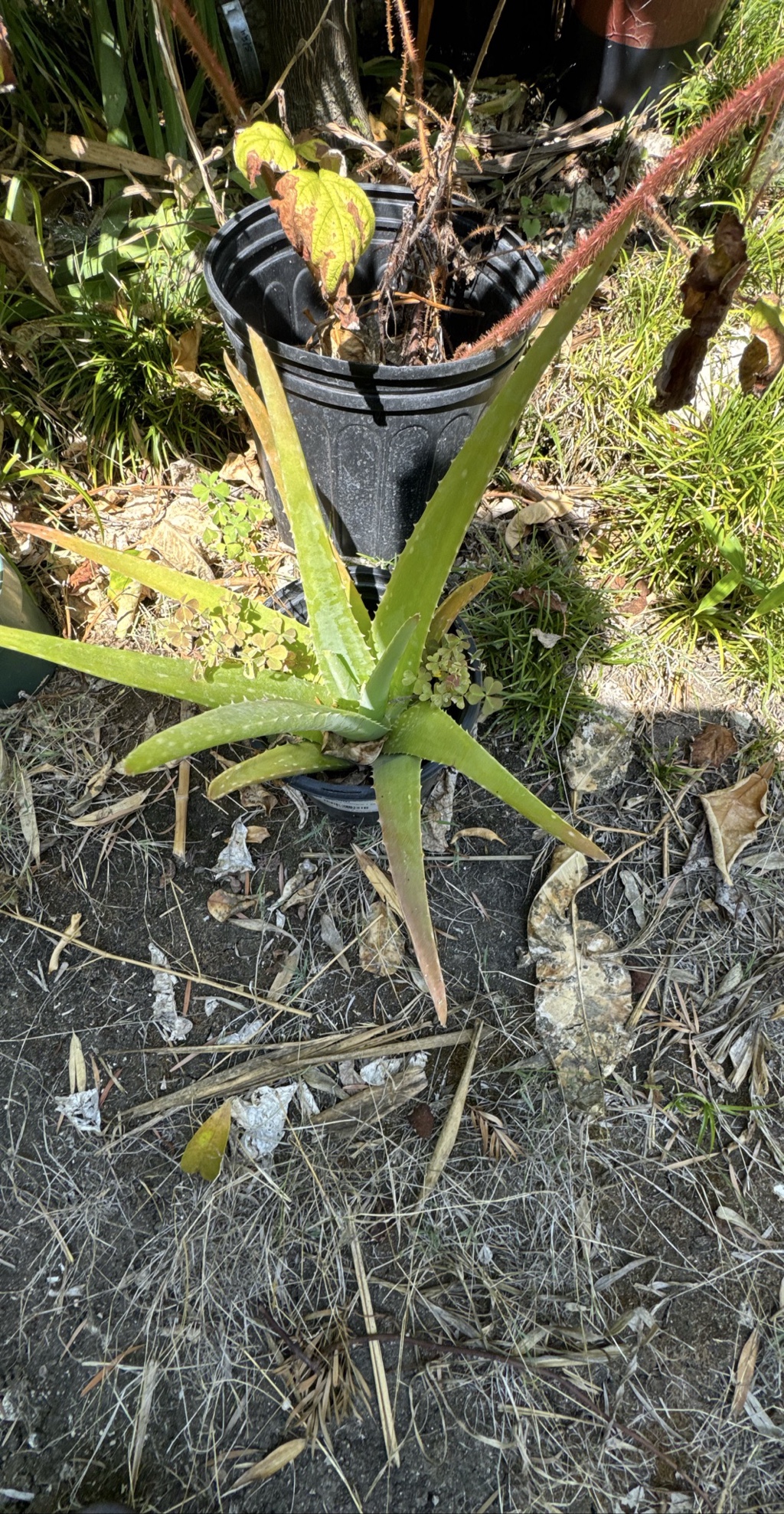
18. Aloe (Aloe spp.)
Zones: 9–12 | Water: Low | Sun: Full sun to part shade
Beyond the familiar Aloe vera, there's a whole world of landscape aloes. Aloe striata (coral aloe) is one of the toughest, handling light frost and full-blast sun while producing tall coral flower spikes that hummingbirds love. In frost-prone areas, grow aloes in containers and bring them under cover in winter.
Drought Tolerant Ground Covers

19. Creeping Thyme (Thymus serpyllum)

Zones: 4–9 | Water: Low | Sun: Full sun
The dream lawn replacement. Creeping thyme forms a dense, fragrant mat just 2–3 inches (5–7 cm) tall, erupting in tiny purple flowers in early summer. It handles light foot traffic, releases scent when stepped on, and needs mowing exactly never. 'Elfin' is the tightest, most walkable variety; 'Coccineus' has deep red flowers.
20. Ice Plant (Delosperma cooperi)
Zones: 5–10 | Water: Very low | Sun: Full sun
The name is misleading — this South African succulent thrives in blazing heat. The daisy-like magenta flowers cover the plant from June to September, and the fleshy leaves are packed with water reserves. Use it on slopes for erosion control, in rock gardens, or cascading over walls. 'Fire Spinner' has insane orange-and-pink bicolor flowers that stop people on the sidewalk.
Soil Prep and Mulching: Setting Drought Tolerant Plants Up for Success
Even the toughest waterwise plants need a good start. Here's the real-talk version of soil prep for dry gardens:
Test your soil first. A basic soil test ($15–$30 from your local extension office) tells you pH, nutrient levels, and — critically — your soil's texture. This determines everything about your amendment strategy.
- Heavy clay: Amend with pumice or decomposed granite (not perlite — it floats out). Work it in 12–18 inches (30–45 cm) deep. Raised beds with a custom mix are often easier than fighting native clay.
- Sandy soil: You actually have the advantage for most drought tolerant plants. Add a thin layer of compost (2 inches / 5 cm) to boost microbial life, but don't overdo organic matter — you want drainage.
- Rocky/decomposed granite: Many xeriscape plants love this. Just ensure there's enough fine material for roots to grip. Top-dress with a thin compost layer and let earthworms work it in.
Mulching strategy matters. Here's the split:
- Organic mulch (bark, wood chips, straw): Best for perennials, shrubs, and trees. Apply 3–4 inches (7–10 cm) deep, keeping it 4–6 inches (10–15 cm) away from stems. Reduces soil temperature by up to 10°F and cuts water evaporation by 25–50%.
- Mineral mulch (gravel, decomposed granite, river rock): Best for succulents, agaves, cacti, and Mediterranean plants. Prevents crown rot, radiates heat that these plants enjoy, and lasts indefinitely.
- Living mulch (ground covers like creeping thyme or sedum): The best of both worlds. Shades soil, reduces evaporation, looks beautiful, and adds biodiversity.
Sam's San Diego Xeriscape Transformation
Sam from San Diego ripped out 800 square feet (74 m²) of fescue lawn in 2024 after watching his water bill climb past $200 a month through summer. He replaced it with a three-zone xeriscape design: a small oasis zone near the patio with potted herbs and a dwarf citrus tree, a transition zone of lavender, salvia, and muhly grass, and a dry zone along the street with agave, red yucca, and decomposed granite mulch.
"The first summer was nerve-wracking," Sam says. "I kept wanting to water everything. But I stuck to once a week for the new perennials and nothing for the succulents. By October, the muhly grass was blooming pink, the salvia had rebloomed twice, and I'd cut my water usage by 65%." His water bill dropped to under $80 — and his HOA gave him a landscaping award.
What made the difference was grouping by water needs. The transition zone plants — lavender, salvia, coreopsis — all wanted the same infrequent deep soak. The agaves and prickly pears in the street zone got nothing but rainfall. No wasted water, no guesswork. Sam tracked everything through Tendra, using the app's climate-specific plant recommendations to make sure every pick was matched to his Zone 10b conditions and local rainfall patterns.
Building Your Waterwise Plant Palette: Where to Start
If you're feeling overwhelmed by 20 options, here's a simple formula to start with just five plants that create a complete, balanced waterwise garden:
- One structural anchor: Agave, red yucca, or a large ornamental grass
- Two flowering perennials: Pick from the perennials section based on your zone
- One shrub: For screening, structure, or seasonal interest
- One ground cover: To tie everything together and shade bare soil
This five-plant combo gives you year-round structure, seasonal color, vertical variety, and functional soil coverage. As you gain confidence, layer in more species from each category.
Remember: the best drought tolerant plants for your garden are the ones adapted to your specific climate. A plant that's bulletproof in Phoenix might struggle in Portland. Check your USDA Hardiness Zone, consider your summer highs and winter lows, and pay attention to your soil type. For those exploring summer color options in between the drought-tolerant stalwarts, our guide to annual flowers that bloom all summer pairs well with waterwise perennials.
Choosing the right heat tolerant garden plants doesn't mean settling for a sparse, brown landscape. With the right xeriscape plants grouped by water needs, proper soil prep, and smart mulching, your garden can be the one that looks amazing in August while everyone else is hauling sprinklers. The plants do the hard work — you just have to pick the right ones for your zone and get out of their way.
Discover climate-matched plant varieties for your exact growing conditions with Tendra — where local gardeners connect and thrive.