Why the Snake Plant Deserves a Spot in Every Home
If there's one houseplant that has earned its reputation as virtually indestructible, it's the snake plant. Formally known as Dracaena trifasciata (previously classified as Sansevieria trifasciata), this striking West African native has been gracing indoor spaces for centuries — and for good reason. Whether you call it mother-in-law's tongue or simply "that tall spiky plant in the corner," learning how to care for a snake plant properly can transform it from merely surviving to genuinely thriving. In this complete snake plant care guide, we'll walk you through everything: light, water, soil, propagation, troubleshooting, and even the rare chance your plant might bloom. Whether you're a total beginner or a seasoned plant parent looking to level up, you'll find actionable tips you can use today.
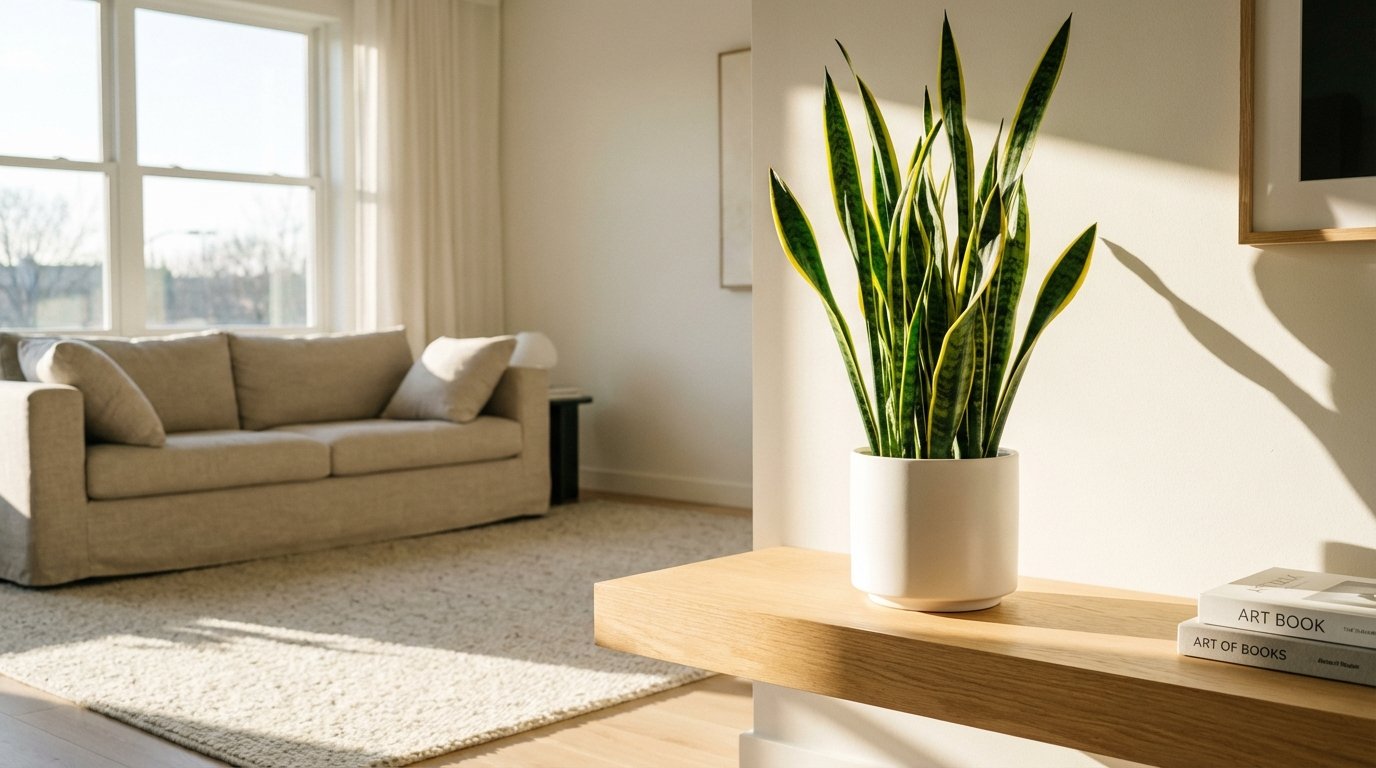
With its bold, architectural leaves, this low-maintenance beauty fits effortlessly into any room.
Snake Plant Quick Care Cheat Sheet
Before we dive deep, here's your at-a-glance reference for snake plant care:
- Light: Bright indirect light preferred; tolerates low light and some direct sun
- Water: Every 2–4 weeks; allow soil to dry completely between waterings
- Soil: Well-draining cactus/succulent mix with added perlite
- Temperature: 60–85°F (15–29°C)
- Humidity: Average household humidity is fine
- Fertilizer: Once in spring and once in summer with balanced liquid fertilizer
- Toxicity: Mildly toxic to cats and dogs (contains saponins)
- Difficulty: Beginner-friendly
Keep this cheat sheet handy — or better yet, set up personalized care reminders in the Tendra app so you never miss a watering day.
Snake Plant Light Requirements: Finding the Sweet Spot
What Kind of Light Do They Need?
One of the biggest reasons people love this plant is its remarkable flexibility with light. It thrives in bright, indirect light — the kind you get a few feet back from an east- or north-facing window. Under these conditions, you'll see the fastest growth and the most vivid leaf colors, especially on variegated varieties with yellow or silver margins.
That said, this species is remarkably tolerant. It will survive in low-light corners, dimly lit hallways, and even windowless bathrooms with fluorescent lighting. Growth will slow considerably in low light, and variegation may fade, but the plant won't die. Few houseplants can make that claim.
Can They Handle Direct Sunlight?
Moderate direct morning sunlight (from an east-facing window) is perfectly fine. However, prolonged afternoon sun — especially through a south- or west-facing window in summer — can scorch the leaves, causing brown, crispy patches. If your plant is near a sunny window, a sheer curtain provides ideal protection.
Best Rooms for Placement
Here's a room-by-room breakdown to help you pick the perfect spot:
- Bedroom: Excellent choice. Thanks to CAM photosynthesis, this plant actually releases oxygen at night while absorbing CO₂ — the opposite of most plants. It's one of the few houseplants that can genuinely improve nighttime air quality.
- Office: Great for desks or floor corners. Tolerates fluorescent lighting and irregular care schedules.
- Bathroom: Works if there's some light. The occasional humidity spike won't bother it, though it doesn't need or crave high humidity.
- Living room: Taller varieties like 'Laurentii' make stunning floor plants next to sofas or bookshelves.
How to Water a Snake Plant Without Killing It

When in doubt, wait another day. Underwatering is far safer than overwatering for this drought-tolerant species.
How Often Should You Water?
This is the number one question — and the number one cause of trouble. The golden rule: let the soil dry out completely before watering again. In practice, that means:
- Spring/Summer (active growth): Every 2–3 weeks
- Fall/Winter (dormancy): Every 4–6 weeks, sometimes even less
Stick your finger 2 inches (5 cm) into the soil. If it's bone dry, water thoroughly until it drains from the bottom. If there's any moisture, wait.
Signs of Overwatering vs. Underwatering
Overwatering (the more common killer):
- Soft, mushy leaves — especially at the base
- Yellow leaves that feel limp, not crispy
- Foul smell from the soil (root rot)
- Soggy or waterlogged soil that never seems to dry
Underwatering (much rarer, easily fixed):
- Wrinkling or curling leaves
- Brown, crispy leaf tips
- Soil pulling away from the pot edges
- Leaves that feel thin and papery
Water Quality Matters
Most tap water works fine for this species. However, if your municipal water has high fluoride or chlorine content, you may notice brown leaf tips over time. Simple fixes include: letting tap water sit out overnight (chlorine evaporates), using filtered water, or collecting rainwater. If you have a water softener, avoid that water — the sodium buildup can harm roots.
Best Soil for Snake Plants
The Ideal Mix
These plants evolved in rocky, arid West African soils, so drainage is everything. The best approach is a commercial cactus/succulent potting mix amended with extra perlite for even more drainage. A good ratio:
- 2 parts cactus/succulent mix
- 1 part perlite or coarse sand
DIY Soil Recipe
If you prefer to mix from scratch:
- 1 part standard potting soil
- 1 part coarse sand or pumice
- 1 part perlite
This creates a fast-draining, airy mix that prevents water from sitting around the roots. Avoid moisture-retaining soils marketed for tropical plants or African violets — these hold far too much water and practically guarantee root rot.
Temperature and Humidity
These are adaptable plants when it comes to climate, but they do have limits:
- Ideal range: 60–85°F (15–29°C) — normal household temperatures
- Danger zone: Below 50°F (10°C). Cold exposure causes cellular damage, leading to mushy, water-soaked leaves that won't recover.
- Drafts: Keep away from cold windows in winter and air conditioning vents that blow directly on leaves
As for humidity, average household levels (30–50%) are perfect. Unlike tropical plants such as calatheas or ferns, this species doesn't need a humidifier, pebble tray, or misting. In fact, excessive humidity combined with poor air circulation can encourage fungal issues. Keep it simple.
Fertilizing: Less Is More
When and How to Feed
These are not heavy feeders. During the growing season (spring through mid-summer), fertilize once or twice with a balanced liquid houseplant fertilizer diluted to half strength. That's it. Over-fertilizing causes more problems than under-fertilizing — including salt buildup, leaf burn, and brown tips.
Common Fertilizing Mistakes
- Feeding in winter: Growth slows or stops in fall/winter. Fertilizing during dormancy forces weak, leggy growth.
- Using full-strength fertilizer: Always dilute to 50% of the recommended dose.
- Fertilizing dry soil: Always water first, then apply fertilizer to avoid root burn.
When and How to Repot Your Snake Plant

Repotting every 2–3 years keeps your plant healthy and gives you a chance to inspect the roots.
Signs It's Time to Repot
- Roots growing out of drainage holes
- The pot is cracking or bulging from root pressure
- Water runs straight through without being absorbed
- The plant is top-heavy and tipping over
- Pups (baby plants) are crowding the pot
Step-by-Step Repotting Guide
- Choose the right pot: Go only 1–2 inches (2.5–5 cm) wider than the current pot. Too large a pot retains excess moisture. Always choose a pot with drainage holes — terracotta is ideal because it's porous and wicks away moisture.
- Prepare the soil: Fill the bottom third with your well-draining mix.
- Remove the plant: Tip the pot sideways and gently slide the plant out. If it's stuck, run a knife around the inside edge.
- Inspect roots: Trim any mushy, brown, or dead roots with clean scissors. Healthy roots are firm and white or orange.
- Repot: Place the plant in the new pot and fill around it with soil. Don't pack tightly — roots need air.
- Wait to water: Give the roots 3–5 days to heal before the first watering. This prevents rot at cut sites.
The best time to repot is in spring, when the plant is entering its active growth phase and can recover quickly from the disturbance.
How to Propagate a Snake Plant: 3 Proven Methods

Water propagation lets you watch roots develop in real time — expect visible growth in 3–6 weeks.
Method 1: Division (Fastest and Best for Variegation)
Division is the quickest way to get a new, full-sized plant — and it's the only method that preserves variegation (like the yellow edges on 'Laurentii'). Here's how:
- Remove the plant from its pot
- Identify natural clusters of leaves with their own root systems
- Use a clean, sharp knife to separate clusters, ensuring each division has roots
- Plant each division in its own pot with well-draining soil
- Wait 5–7 days before watering
Method 2: Leaf Cuttings in Water
This is the most popular method because it's satisfying to watch roots grow. Cut a healthy leaf into 3–4 inch (7–10 cm) segments. Important: mark which end was closer to the soil — leaves are polar and won't root if placed upside down. Place in a jar of water, change water weekly, and roots should appear in 4–8 weeks.
Key caveat: Leaf cuttings will NOT preserve variegation. A 'Laurentii' leaf cutting will produce a solid green plant. If you want to keep those yellow edges, use division instead.
Method 3: Leaf Cuttings in Soil
Follow the same cutting process, but plant segments directly into moist (not wet) cactus mix. Keep in bright indirect light and water sparingly. Rooting takes 6–10 weeks — you'll know it's working when you feel resistance when gently tugging the cutting.
Propagation Timeline: What to Expect
- Week 1–2: Callous forms over the cut end. No visible change.
- Week 3–4: First tiny root nubs appear (water method) or roots begin below soil (soil method).
- Week 5–8: Roots reach 1–2 inches (2.5–5 cm). In water, you'll see them clearly.
- Week 8–16: New pup (baby shoot) emerges from the base. This is the exciting part.
- Month 4–6: Pup develops its own leaves. You now have a fully independent new plant.
Nick from New York shared his experience on the Tendra community: "I propagated six cuttings in water last spring. Four of the six rooted successfully, and by fall I had baby plants growing in each one. The key was patience — I almost gave up at week three when nothing seemed to be happening."
Popular Snake Plant Varieties Worth Collecting
There are over 70 recognized species and cultivars. Here are the most popular varieties you'll encounter:

'Laurentii': The classic. Dark green leaves with bold yellow edges. Grows 2–4 feet (60–120 cm) tall. The most widely available variety and a perfect starter plant.

'Moonshine': Silvery-green, almost ethereal leaves with subtle dark green banding. Compact grower, typically 2 feet (60 cm) tall. Stunning in modern, minimalist interiors.

'Black Gold': Deep, dark green leaves with golden-yellow margins. Similar to 'Laurentii' but with richer, darker coloring. A collector favorite.

'Hahnii' (Bird's Nest): Compact rosette shape that stays under 6 inches (15 cm) tall. Perfect for desks, shelves, and small spaces. Available in green, golden, and silver varieties.

Cylindrica (African Spear): Cylindrical, spear-shaped leaves instead of flat blades. Grows in a fan pattern. Often sold braided for a decorative look.

'Whale Fin' (Dracaena masoniana): A single massive leaf per growth point — wide, paddle-shaped, and dramatic. Rare and increasingly sought after by collectors.

'Fernwood Mikado': Thin, cylindrical dark green leaves with a graceful, fountain-like growth habit. A more delicate look compared to the classic broad-leafed types.
All varieties share the same basic care needs. The main differences are size, growth speed, and light preferences — 'Moonshine' prefers slightly brighter conditions to maintain its silvery color, while 'Hahnii' is even more tolerant of low light than its taller relatives.
Snake Plant Benefits: More Than Just Good Looks
Air Purification
NASA's famous Clean Air Study (1989) identified Sansevieria as effective at removing formaldehyde, xylene, toluene, and nitrogen oxides from indoor air. While it's worth noting that the study used sealed chambers — real rooms with ventilation dilute the effect — having several plants in a room does contribute to better air quality over time.
Nighttime Oxygen Production
Unlike most plants that only photosynthesize during the day, this species uses CAM (Crassulacean Acid Metabolism) photosynthesis. It opens its stomata at night to absorb CO₂ and releases oxygen. This makes it one of the few houseplants genuinely beneficial as a bedroom companion for air quality while you sleep.
Mental Health and Wellbeing
Studies consistently show that indoor plants reduce stress, improve focus, and boost mood. A low-maintenance species that stays healthy with minimal attention is especially valuable — you get the psychological benefits of living with greenery without the anxiety of keeping a fussy plant alive.
Are Snake Plants Toxic to Pets?
Yes — they contain saponins, which are mildly toxic to cats and dogs. If a pet chews on a leaf, they may experience nausea, vomiting, or diarrhea. The toxicity is generally mild and not life-threatening, but it's unpleasant and worth preventing.
How to Keep Pets Safe
- Place plants on high shelves, hanging planters, or in rooms pets don't access
- Use deterrent sprays (citrus-based sprays on pot edges work well for cats)
- Choose the compact 'Hahnii' variety — easier to keep on high, out-of-reach surfaces
- Monitor puppies and kittens especially — they're more likely to chew on anything
If you have persistent chewers, consider pet-safe alternatives like spider plants (Chlorophytum comosum), Boston ferns, or calatheas that offer similar visual appeal without the toxicity concern.
Common Snake Plant Problems and How to Fix Them

Yellowing leaves are usually the first sign of overwatering — catching it early makes all the difference.
Yellow Leaves
The most common cause is overwatering. Check the soil — if it's damp, stop watering immediately and let it dry out completely. Other causes include too much direct sun (sunburn) or nutrient deficiency (if you haven't fertilized in over a year). Trim fully yellow leaves at the base with clean shears — they won't recover.
Brown Tips
Usually caused by inconsistent watering, low humidity, or fluoride/chlorine in tap water. Switch to filtered or rainwater, maintain a consistent watering schedule, and trim brown tips at an angle for a natural look.
Drooping or Falling Leaves
Almost always overwatering or root rot. Remove the plant from its pot, inspect roots, trim anything mushy and brown, repot in fresh dry soil, and don't water for at least a week.
Curling Leaves
Can signal dehydration (check if soil is bone dry), pest infestation (look for mealybugs or thrips), or cold stress (check for nearby drafts or cold windows).
Mushy Base and Root Rot
This is the emergency scenario. If the base of the plant is soft and slimy, root rot has set in. Act fast: unpot, cut away ALL mushy tissue with a sterile knife, let the healthy portion dry for 24–48 hours, then repot in completely dry soil. If the rot has reached the leaf bases, you may need to salvage healthy leaf sections and propagate fresh. Discover early warning signs with Tendra's plant health tracking — where catching problems early saves your collection.
Slow Growth
This is often not a problem at all — these are naturally slow growers, putting out only 2–4 new leaves per year. If growth seems unusually stagnant, check for low light conditions, rootbound pot, or depleted soil nutrients.
Snake Plant Pests to Watch For
While relatively pest-resistant, no plant is immune. Here are the usual suspects:
- Mealybugs: White, cottony clusters in leaf crevices. Wipe with rubbing alcohol on a cotton swab, then spray with neem oil solution.
- Spider mites: Tiny dots and fine webbing, usually on leaf undersides. Increase humidity temporarily and spray with insecticidal soap.
- Fungus gnats: Small flies around the soil surface — a sign of overwatering. Let soil dry completely; use yellow sticky traps for adults and a hydrogen peroxide soil drench (1:4 ratio with water) for larvae.
- Thrips: Silvery streaks or tiny black dots on leaves. Treat with neem oil or insecticidal soap, applied weekly for 3–4 weeks.
For detailed pest identification and organic treatment methods, check our guide on how to get rid of common plant pests naturally.
Can Snake Plants Actually Flower?
Yes — and it's a surprisingly enchanting event. Under the right conditions, mature plants can send up a tall, slender stalk covered in tiny, tubular white or cream-colored flowers. The blooms are delicately fragrant, especially at night, and produce small, sticky nectar drops.
Flowering is triggered by mild stress — typically a combination of being slightly rootbound and receiving bright light. It's not something you can reliably force, and it doesn't happen often. If your plant blooms, enjoy it! The flowers last about two weeks. Afterward, cut the flower stalk at the base. Flowering doesn't harm the plant, though the individual rosette that flowered may slow its growth afterward.
Snake Plant Care by Season
This is the care calendar that will set you apart from "water it sometimes and hope for the best." Adjust your routine with the seasons for the healthiest plant possible.
Spring (March–May): Wake-Up Time
- Increase watering frequency to every 2–3 weeks
- Apply the first dose of diluted balanced fertilizer
- This is the ideal window for repotting if needed
- Begin propagation projects — longer days fuel faster root growth
- Move to a brighter spot if it's been in a dark corner all winter
Summer (June–August): Peak Growth
- Water every 2 weeks (possibly more in hot, dry climates)
- Apply second (and final) fertilizer dose in early summer
- Watch for pests — warm weather brings mealybugs and spider mites
- Can move outdoors to a shaded patio (avoid direct midday sun)
- This is when you'll see the most new leaf growth
Fall (September–November): Slow Down
- Reduce watering to every 3–4 weeks
- Stop fertilizing entirely
- Inspect for pests before bringing outdoor plants back inside
- Move away from cold windows as temperatures drop
Winter (December–February): Rest Period
- Water only every 4–6 weeks — the plant is dormant
- No fertilizer
- Keep away from cold drafts, heating vents, and radiators
- Maintain temperatures above 50°F (10°C)
- Growth will appear to stop — this is completely normal
Tendra's smart care reminders adjust automatically by season, so your watering schedule stays dialed in year-round — no guesswork required.
Frequently Asked Questions
How long do snake plants live?
With proper care, they can live 25 years or more. Some specimens in botanical collections are estimated to be over 50 years old. These are true long-term plant companions.
How fast do they grow?
Slow to moderate. Expect 2–4 new leaves per year in good conditions. Taller varieties like 'Laurentii' may add 2–4 inches (5–10 cm) of height annually. Patience is part of the process.
Can they live outdoors?
Yes, in USDA Hardiness Zones 9b–12, they can live outdoors year-round. In cooler zones, they make excellent patio plants in summer but must come inside before nighttime temperatures drop below 50°F (10°C). Our USDA planting zone guide can help you determine your zone.
Do they like small pots?
They actually prefer being slightly rootbound. A snug pot encourages flowering and prevents waterlogged soil. Only size up 1–2 inches (2.5–5 cm) when repotting.
Should I cut off brown tips?
You can trim them at an angle for a natural appearance. Cutting brown tips won't harm the plant, but it won't trigger new growth either. Address the underlying cause (usually water quality or inconsistent watering) to prevent new brown tips.
Can I put one in my bathroom?
Absolutely — as long as there's some light (even a small window or skylight works). The occasional humidity spike from showers won't harm it.
How do I make it grow faster?
More light is the single biggest factor. Move it to a brighter location, ensure it's in well-draining soil, fertilize lightly in spring/summer, and keep temperatures warm. Beyond that, accept its naturally moderate pace — healthy growth beats fast, weak growth every time.
Your Snake Plant Journey Starts Here
Whether you're bringing home your first plant or adding a 'Whale Fin' to an already impressive collection, the fundamentals are beautifully simple: bright indirect light, infrequent watering, well-draining soil, and a little seasonal awareness. Master those four pillars, and your plant will reward you with years — even decades — of effortless beauty.
The snake plant proves that great plant parenthood doesn't require a green thumb. It just requires paying a little attention at the right times. And if you want help getting those times exactly right, discover personalized care schedules and a thriving community of local gardeners with Tendra — where plant parents connect, grow, and share.
For more care guides on popular houseplants, explore our complete guide to spider plant care or learn about the diverse world of philodendron varieties and care.


