October is the season that punishes hesitation. A bed you plant this week can feed you into February; the same bed left bare will just grow weeds and lose nitrogen to the winter rain.

If you are trying to figure out what to plant in October, the honest answer is: it depends more on your first frost date than on the calendar. A gardener in Portland, Maine has maybe two weeks before the ground gets serious. A gardener in San Diego is basically starting a second spring. The plan below is built around that: zone-by-zone planting windows, the crops that still have time, the ones that need to go in this week, and the honest list of what you should just stop trying to plant.
Read it once, then pull up your own zone and skip to the sections that apply to you. If you are not sure of your USDA zone or your local first-frost date, the fastest lookup is a plant-care app that already knows your address — Tendra will pull both when you set up your garden profile so your planting reminders line up with your actual climate, not a national average.
What to plant in October: the 30-second rule
Before you buy a single seed packet, do this math: find your average first-frost date, count backward the "days to maturity" on the packet, and add two weeks of "fall slowdown" — because plants grow noticeably slower once daylight drops below about ten hours a day. If the answer lands before today, that crop needs to go in as a transplant, not from seed. If it lands after your frost date, that crop is off the October menu unless you can protect it under a row cover, low tunnel, or cold frame.
That single calculation replaces almost every "can I still plant X in October" question you will find online. It also explains why the same crop — say, spinach — is a "plant right now" for zone 7 and a "wait until January" for zone 10.
Cool-season vegetables: what still has time

The safest bets for October across most of the United States are the fast, frost-tolerant leafy greens and roots. In rough order of how forgiving they are of a late start:
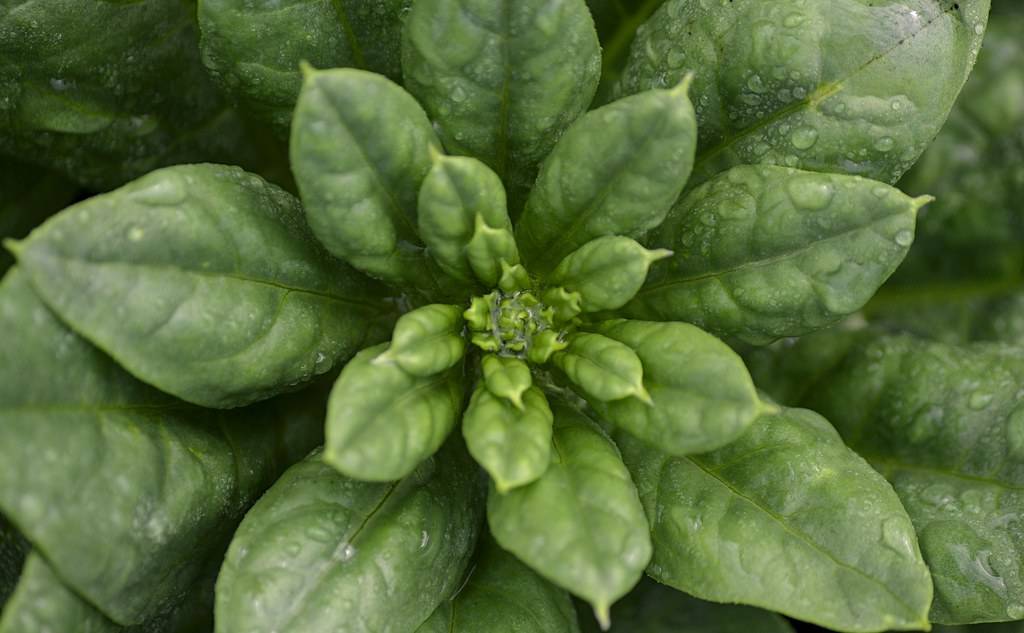
- Spinach (Spinacia oleracea) — germinates in cool soil, shrugs off light frost, and will overwinter under mulch in zones 6 and warmer. Direct-sow up to about 4 weeks before your first hard freeze. See our detailed fall spinach guide for spacing and variety picks.
- Loose-leaf lettuce (Lactuca sativa) — ready to cut in 30–45 days. In zones 7+ you can still direct-sow; colder zones should switch to transplants. Our fall lettuce planting guide walks through cold-hardy varieties like 'Winter Density' and 'Rouge d'Hiver'.
- Radishes (Raphanus sativus) — 25–30 days from seed. If your ground is still workable, you have time almost anywhere.
- Arugula, mizuna, mustard greens, tatsoi — all fast, all cold-tolerant, all improve in flavor after a light frost.
- Kale, collards, Swiss chard — plant as transplants now if you want a harvest before hard freeze; from seed only in zones 8+.
- Bok choy, pak choi, napa cabbage — transplants only at this point in most of the country.
- Beets and turnips — sow now in zones 7+ for baby roots and greens; the greens alone are worth it.
- Carrots — only in zones 8 and warmer for a real root harvest; elsewhere, save carrots for early spring.
- Peas — a gamble everywhere except mild coastal zones 8–10, where a fall snap-pea planting can pay off beautifully.
Brassicas and hardy transplants

Broccoli, cabbage, cauliflower, Brussels sprouts, and kohlrabi all need 60–100 days to head up. That means October seed-starting is a stretch almost everywhere. What does work in October is buying 4–6 week old transplants from a local nursery and getting them in the ground within the first ten days of the month. In zones 8 and warmer, this is still one of the best planting windows of the year. In zones 6 and 7, plant transplants only, and be ready to throw a row cover over them when the first frost warning lands.
A quick honest note on Brussels sprouts: if you did not start them in July or August, October is too late. Buy them at the farmers market this year and put a reminder in your garden app for next summer.
Garlic: the crop October was invented for

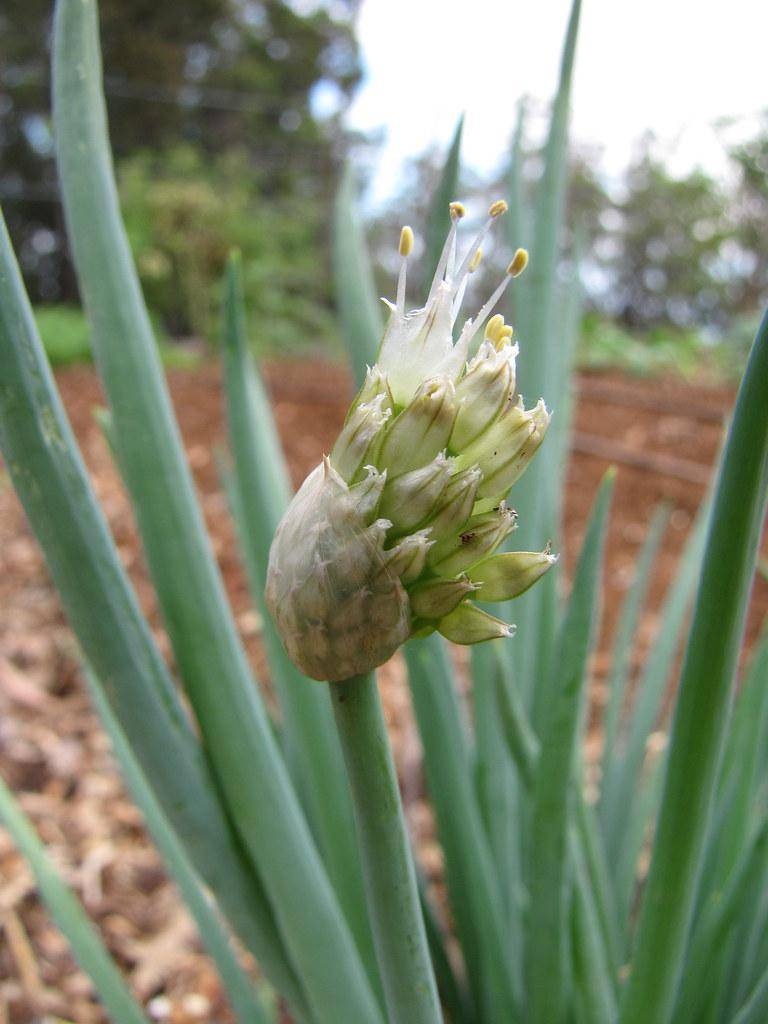
If you plant one thing in October, plant garlic (Allium sativum). It rewards you with almost no effort: pop cloves into the ground now, mulch, ignore until June, harvest heads five to ten times bigger than the clove you planted. The only real skill is timing and choosing the right type.
- Hardneck garlic (Rocambole, Purple Stripe, Porcelain groups) — best for zones 3–7. Needs a cold period to form heads. Plant when soil temperature drops below about 60 °F (15 °C).
- Softneck garlic (Artichoke, Silverskin groups) — better for zones 7–10. Stores longer, braids nicely.
- Elephant garlic (Allium ampeloprasum — technically a leek) — plant like garlic, harvest like a giant.
Zone-by-zone timing:
- Zones 3–5: plant early-to-mid October, mulch heavily (10 cm / 4 in of straw).
- Zones 6–7: plant mid-to-late October.
- Zones 8–9: plant late October through November.
- Zone 10 and warmer: refrigerate seed garlic for 6–8 weeks first, then plant November–December.
Space cloves 15 cm (6 in) apart, pointy end up, 5 cm (2 in) deep in mild zones and 8 cm (3 in) deep in cold zones. If you are still deciding whether it is too late where you live, our fall alliums planting guide has the full state-by-state window with soil-temperature triggers.
Onions, shallots, and the rest of the allium family

Alliums are the sleeper hit of October. Fall-planted shallots and multiplier onions give you fatter bulbs and earlier harvests than anything you can plant in April.
- Shallots — plant sets in October across zones 5–9; each set becomes a cluster of 6–8 bulbs by June.
- Multiplier and potato onions — same window; a small perennial patch will feed a kitchen for years.
- Overwintering bulb onions (varieties like 'Walla Walla', 'Bridger', 'Desert Sunrise') — from sets or transplants in zones 6+.
- Bunching onions and scallions (Allium fistulosum) — direct-sow in October in zones 7+ for spring bunching.
- Chives — divide and replant existing clumps now, or set out transplants; they will reappear the moment the ground thaws.
- Leeks — too late from seed almost everywhere; transplants only, and only in zones 8+.
Cover crops: the "plant" that pays you back in April

If you have a bed that will not get a food crop this fall, do not leave it bare. October is the last honest window to establish a cover crop across most of the country. Cover crops hold your soil in place, feed soil biology through the winter, and — depending on the species — fix nitrogen or break up compaction for free.
- Cereal rye (Secale cereale) — the most forgiving late-planting cover. Germinates in cold soil, roots deep, will outcompete almost any weed. Plant through late October in zones 5–8; through November in warmer zones.
- Winter wheat and oats — good soil builders; oats winter-kill in zones 6 and colder, which some gardeners prefer because it means less spring termination work.
- Hairy vetch, crimson clover, Austrian winter peas — nitrogen fixers. Plant by early October in colder zones; they need 6–8 weeks of growth before hard freeze.
- Daikon (tillage radish) — sends a fat taproot 30 cm (12 in) deep, decays over winter, leaves natural drainage channels behind. Plant early October in zones 5–8.
- Mixes — a rye/vetch or oat/pea blend gives you both erosion control and nitrogen; often the best call for home gardens.
For rates, termination timing, and no-till strategies, we go deep in the fall cover crops guide.
Fall bulbs: plant now for a spring you will actually remember

Spring-flowering bulbs need to be in the ground before it freezes solid. October is prime for zones 3–7 and the start of the window for zones 8–9 (where many bulbs need to be pre-chilled in the fridge for 8–12 weeks first).
- Tulips (Tulipa spp.) — plant when soil is consistently below 60 °F (15 °C). 15 cm (6 in) deep, pointy side up.
- Daffodils and narcissus (Narcissus spp.) — the most reliable naturalizers; deer and voles ignore them.
- Crocus, snowdrops, scilla, chionodoxa, muscari — small bulbs, huge visual return, plant in generous drifts of 25+.
- Alliums (ornamental) — plant with the tulips; they extend the show into May and June.
- Hyacinth and Dutch iris — plant now for cut-flower rows.
Our fall flower bulbs guide has the depth-and-spacing chart plus notes on which bulbs actually deter deer.
Overwintering herbs

Herbs are the quiet win of October gardens. Many perennial and biennial herbs handle cold better than most vegetables — some are actually better for a light frost.
- Parsley (Petroselinum crispum) — set out transplants now for fresh leaves into December, and again next spring before it bolts.
- Cilantro (Coriandrum sativum) — hates summer, loves fall. Direct-sow in zones 7+ for a huge cool-season harvest.
- Dill — direct-sow in mild zones for baby dill and seed heads.
- Chives, thyme, oregano, sage, mint — divide existing clumps or plant nursery transplants; they will establish roots all winter.
- Rosemary — zone-dependent. In zones 7+ plant hardy cultivars like 'Arp' or 'Hill Hardy'. In colder zones, keep it in a pot and bring it inside.
- French tarragon — plant divisions now; skip the seed, which is almost always the flavorless Russian type.
Zone-by-zone planting map
This is the section to bookmark. Windows are for outdoor planting without a low tunnel; add 2–3 weeks if you use season-extension gear.
Zones 3–4 (northern Minnesota, Maine, Montana, most of the Dakotas)
- Plant early October at the latest: garlic (mulch heavily), overwintering onion sets, spring-flowering bulbs, cover crops (cereal rye).
- Cold frames only: spinach, mâche, arugula, some hardy lettuce.
- Skip: brassica transplants, cool-season roots from seed, most herb transplants.
Zones 5–6 (Chicago, Denver, most of New England, upstate New York)
- Plant early-to-mid October: garlic, shallots, spring bulbs, cover crops, hardy perennial herbs, divide chives/rhubarb/asparagus beds.
- Plant as transplants under row cover: kale, spinach, lettuce, parsley.
- Skip: broccoli/cabbage from seed, warm-season anything.
Zone 7 (Washington DC, Nashville, Portland OR, coastal Massachusetts)
- Plant all month: garlic, onion sets, shallots, spinach, arugula, radishes, turnips, mustards, cilantro, parsley, kale/collard transplants, cover crops.
- Late October: last honest window for lettuce seed and beet greens.
- Skip: broccoli or cauliflower from seed.
Zone 8 (Atlanta, Dallas, Sacramento, Seattle, Charlotte)
- Plant all month: full menu of leafy greens from seed, brassica transplants, garlic, shallots, onion sets, carrots, beets, turnips, peas, cover crops, herbs, bulbs (pre-chill tulips).
- This is the single best month of the year in zone 8. Plant more than you think you need.
Zone 9 (Houston, Orlando, coastal California, Phoenix)
- Plant now: everything above, plus a second sowing of bush beans in early October, and continued succession sowings of leafy greens every 2 weeks.
- Start setting out cool-season flowers: snapdragons, calendula, poppies, sweet peas, larkspur.
- Pre-chill tulip and hyacinth bulbs in the fridge.
Zone 10+ (Miami, Los Angeles basin, south Florida, south Texas coast)
- October is your spring. Plant warm-season tomato and pepper transplants for a winter harvest; direct-sow cucumbers, summer squash, and bush beans.
- Cool-season crops (lettuce, spinach, cilantro, carrots, brassicas) all thrive now.
- Refrigerate any bulbs that need chilling before planting in November.
Warm-climate October: a real second season

For gardeners in California, the Gulf Coast, south Texas, southern Arizona, and Florida, October is not the end of the growing year — it is the reset. The heat finally breaks, pests slow down, and the humidity drops. Sam in San Diego, one of our regular community contributors, plants his winter tomato bed the first week of October every year. His approach is simple: 4–6 mature transplants of a determinate variety like 'Early Girl' or 'Celebrity' set into a bed enriched with 5 cm (2 in) of compost, drip irrigation, and a light shade cloth for the first ten days while they harden off. He harvests through February most years and skips the summer tomato madness entirely.
The same logic applies to peppers, bush beans, cucumbers, and summer squash in zones 10 and 11. If you have never tried a "reverse-season" warm-climate garden, October is when to start.
Frost timing: the number every October gardener needs

The two dates worth knowing are your average first light frost (around 32 °F / 0 °C) and your first hard freeze (around 28 °F / -2 °C or below for several hours). Light frost sweetens kale, collards, Brussels sprouts, parsnips, cabbage, and carrots. Hard freeze ends the party for anything without protection.
A few rules that hold nearly everywhere:
- Give every fall planting at least 2 weeks of frost-free growth before the first light frost. That is the buffer that lets roots establish.
- A single layer of lightweight row cover buys you about 4 °F (2 °C) of protection. A low tunnel with plastic buys you 8–12 °F (4–6 °C).
- Water the bed the afternoon before a frost — wet soil holds heat better than dry soil.
- Mulch established beds 8–10 cm (3–4 in) deep with straw or shredded leaves after the first freeze locks them in.
What not to plant in October
The honest list of "no, it is too late" almost everywhere north of zone 9:
- Tomatoes, peppers, eggplant, tomatillos (from seed or transplant)
- Melons, watermelons, winter squash, pumpkins
- Sweet corn, okra, southern peas, sweet potatoes
- Basil, other warm-season herbs
- Broccoli, cauliflower, cabbage from seed (transplants only, and only in zones 7+)
- Leeks and celery from seed
- Beans (except in zones 9–10)
- Bare-root fruit trees in the coldest zones — wait for early spring instead
Prep the beds you are not planting
Empty beds are a missed opportunity. If a bed is not getting a food crop or a cover crop, top-dress it with 3–5 cm (1–2 in) of finished compost, add a layer of shredded leaves or straw, and let the soil biology work all winter. Our fall garden bed prep guide walks through the no-dig version step by step. Come March, you will be planting into soil that already smells alive.
Frequently asked questions
What vegetables can I plant in October?
Across most of the United States: spinach, lettuce, arugula, mustard greens, radishes, turnips, kale, chard, cilantro, garlic, shallots, onion sets, and cover crops. In zones 8 and warmer, add carrots, beets, brassica transplants, peas, and overwintering bulb onions. In zones 10+, add warm-season crops like tomatoes and peppers.
Is October too late to plant garlic?
Almost never. October is the ideal month for garlic across zones 3–8. In zones 9–10 you can plant through November; only wait if soil temperature is still above about 60 °F (15 °C).
What can I plant in October by zone?
See the zone-by-zone map above. As a rule of thumb: zones 3–5 finish planting in early October, zones 6–7 have the whole month, zones 8–9 have their best planting window of the year, and zones 10+ are starting a second warm-season garden.
What flowers can I plant in October?
Spring-blooming bulbs (tulips, daffodils, crocus, hyacinth, ornamental alliums) go in now across zones 3–7. In zones 8–10, add cool-season annuals: pansies, violas, snapdragons, calendula, poppies, sweet peas, and larkspur, plus pre-chilled tulips and hyacinths.
Can I plant herbs in October?
Yes — perennial and biennial herbs love October planting. Parsley, cilantro, chives, thyme, oregano, sage, mint, and cold-hardy rosemary all establish well. Skip basil and other warm-season herbs until next May.
Bringing it together
The gardeners who eat well in February are the ones who plant in October. The math is not complicated: find your first-frost date, pick the crops that still have runway, put garlic and shallots in the ground, tuck bulbs in for spring, and cover the beds you are not planting. Two weekends of focused work now buys you six months of harvest and a garden that wakes up in March already ahead.
If you want the planting windows, frost dates, and reminders tuned to your exact address rather than a generic zone map, Tendra pulls your local climate data and turns it into a calendar you can actually plan around. And when you inevitably run into "wait, is that a pest or a nutrient issue?" halfway through fall, the AI plant identification and disease diagnosis will save you the round trip to the extension office.
Discover local planting windows and connect with gardeners in your climate with Tendra — where local gardeners connect and thrive.