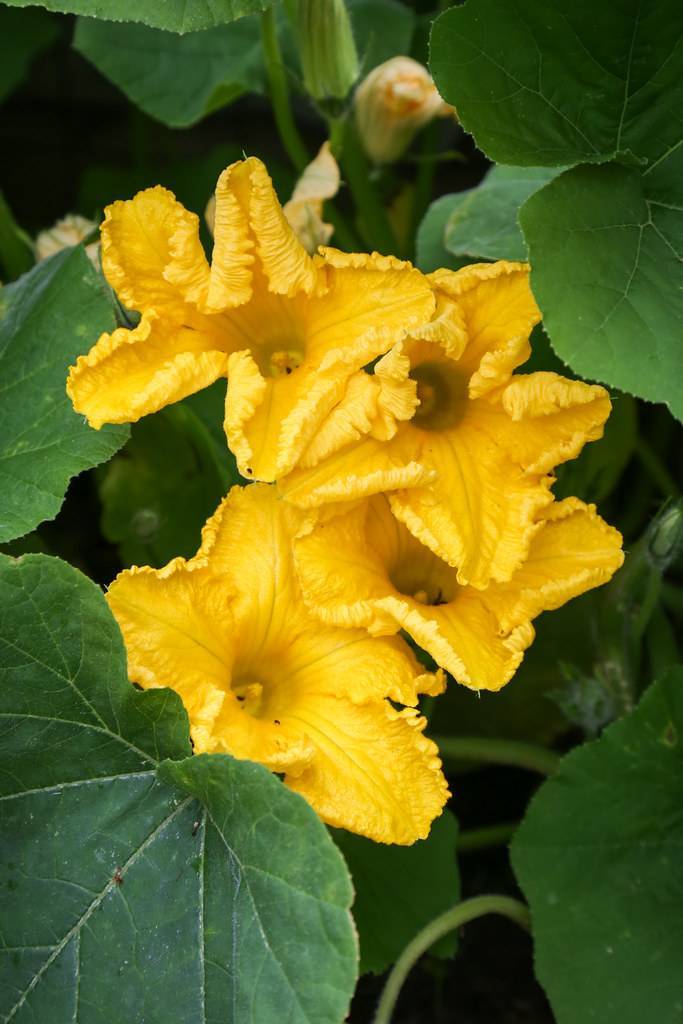
You planted the seeds, babied the seedlings, and finally your summer squash are covered in big golden blossoms. But weeks go by and nothing sets. The flowers open in the morning, wilt by afternoon, and drop off the vine. No fruit. You start searching "why squash not fruiting" and land on the same answer every time: pollination problems.
Here's the real talk — if your squash flowers are falling off and you're staring at empty vines in the middle of July, you're probably dealing with a pollination gap. Maybe there aren't enough bees in your area. Maybe you're gardening on a balcony or rooftop where pollinators rarely visit. Maybe it's been too hot, too rainy, or your plants just started blooming and the male-to-female flower ratio is still out of sync. Whatever the cause, the fix is the same: learn to hand pollinate squash, and take the harvest into your own hands.

Hand pollination isn't some advanced technique reserved for greenhouse pros. It's something any gardener can do in under a minute per flower, with nothing more than a cotton swab or a cheap paintbrush. In this guide, you'll learn exactly how to identify male and female flowers, the three best methods for transferring pollen, the ideal time window, and which cucurbits benefit most from a helping hand.
Why You Might Need to Hand Pollinate Squash and Zucchini
Cucurbits — the plant family that includes squash, zucchini, cucumbers, pumpkins, and melons — depend on insect pollinators to move pollen from male flowers to female flowers. In a perfect world, bees handle this automatically. But we don't always garden in a perfect world.
Here are the most common reasons squash flowers fall off without setting fruit:
- Low pollinator populations: Habitat loss, pesticide use, and urbanization have reduced native bee populations in many areas. If you're in a city, on a high-rise balcony, or near large conventional farms, there may simply not be enough bees visiting your garden.
- Bad weather timing: Bees don't fly in heavy rain, and pollen degrades in extreme heat above 95°F (35°C). A string of rainy mornings or a scorching heat wave right when your plants start flowering can tank pollination rates.
- Male-only blooming phase: Most cucurbits produce a flush of male-only flowers first, sometimes for one to two weeks before the first female bloom appears. This is normal — but it means those early flowers will always drop without fruiting, which understandably worries new growers.
- Garden design: Container gardens, raised beds under row covers (used to protect against cucumber beetles), and greenhouses all restrict pollinator access.
- Low plant density: A single squash plant may not attract enough pollinators on its own. Planting pollinator-friendly flowers nearby can help, but sometimes supplemental hand pollination is still needed.
If any of these situations describe your garden, learning hand pollination zucchini and squash techniques will give you a reliable backup plan — and often a noticeably bigger harvest even in gardens where bees are present.
Male vs. Female Flowers: How to Tell Them Apart
Before you can hand pollinate squash, you need to know what you're working with. Every cucurbit plant produces separate male and female flowers on the same vine, and they look quite different once you know where to look.

Male Flowers
- Grow on a long, thin, straight stem with no swelling at the base
- Appear first — often 1–2 weeks before any female flowers
- Typically more numerous (a healthy plant may produce 3–5 males for every female)
- Center of the flower contains the stamen, a single structure covered in sticky yellow pollen
- These are the pollen donors — they will never produce fruit themselves
Female Flowers
- Grow on a shorter stem with a small bulge at the base that looks like a miniature version of the eventual fruit
- Center contains the stigma, a multi-lobed sticky structure designed to receive pollen
- If successfully pollinated, the bulge at the base will swell into a full-sized fruit
- If not pollinated within about 24 hours of opening, the flower wilts and the tiny fruit yellows, shrivels, and drops — this is the classic "squash flowers falling off" problem
A quick trick: look at the base of the flower, not the petals. If there's a tiny squash-shaped bump below the bloom, it's female. If the stem is just a bare, skinny stalk, it's male. Once you see it, you can't unsee it.
Three Methods to Hand Pollinate Squash
There are three popular approaches. All work well — pick the one that fits your style and what you have on hand.
Method 1: The Paintbrush or Artist Brush Technique
This is the most precise method and the best choice if you have limited male flowers or want to pollinate many female blooms from a single male source.
- Find a freshly opened male flower. It should be fully open with visible yellow pollen on the central stamen.
- Gently touch a small, soft-bristled paintbrush (watercolor brushes work perfectly) or a dry artist brush to the stamen, rolling it lightly to pick up pollen. You'll see the yellow powder clinging to the bristles.
- Move to an open female flower and gently dab the pollen-loaded brush onto each lobe of the stigma in the center. Apply with a light, rolling motion to maximize pollen contact.
- Repeat for every open female flower. One well-loaded brush can pollinate 3–5 females.
Pro tip: Avoid synthetic brushes — natural bristle holds pollen better. A size 6 or 8 round watercolor brush from any art supply store is ideal.
Method 2: The Cotton Swab (Q-tip) Method

If you don't have a paintbrush handy, a regular cotton swab works nearly as well.
- Gently twist the cotton tip against the stamen inside a male flower, collecting visible yellow pollen.
- Transfer the pollen to the stigma of a female flower using the same twisting motion.
- Use a fresh swab for each session to avoid contaminating pollen or spreading disease between plants.
This method is perfect for quick daily pollination rounds. Keep a box of cotton swabs near your garden tools, and it becomes a 30-second morning routine.
Method 3: Direct Flower-to-Flower Transfer
The most satisfying (and oldest) method — no tools required.
- Pick a fully open male flower from the vine. You can snap it off cleanly at the stem.
- Carefully peel back or remove the petals to expose the pollen-covered stamen.
- Press the stamen directly against the stigma of a female flower, rubbing gently to transfer pollen. Make direct contact with each lobe of the stigma.
- One male flower can typically pollinate 2–3 females before the pollen runs out.
This is the method most experienced growers prefer because the direct contact ensures maximum pollen transfer. The downside: it uses up a male flower each time. If your plant is producing plenty of males (most do), this isn't an issue.
When to Hand Pollinate: Timing Is Everything
Cucurbit flowers have a short window. Get the timing wrong, and even perfect technique won't help.
- Early morning is best: Flowers open at dawn and pollen is freshest, stickiest, and most viable between 6:00 AM and 9:00 AM. By midday, pollen dries out and viability drops sharply.
- The same morning the flower opens: Female flowers are receptive for roughly one day. If a female opens today and doesn't get pollinated, it won't get a second chance — the flower will close, wilt, and the tiny fruit will abort.
- Avoid wet flowers: If there's heavy dew or rain, wait until the petals dry slightly. Wet pollen doesn't transfer as effectively.
- Repeat daily: New flowers open every morning during peak production. Make hand pollination part of your morning garden routine for 2–3 weeks during the main flowering period.
If you're using Tendra to track your garden, you can set care reminders for your cucurbits to check for new blooms each morning during the flowering window. It's a small habit that pays off enormously at harvest time.
Which Cucurbits Benefit from Hand Pollination?
While the technique is essentially the same across the family, some cucurbits respond differently to hand pollination.
Summer Squash and Zucchini
These are the top candidates for hand pollination. Zucchini (Cucurbita pepo) produces abundant flowers and sets fruit quickly after successful pollination — often you'll see noticeable growth within 24–48 hours. Summer squash varieties like yellow crookneck, pattypan, and cousa all respond well. Because these plants are harvested young and frequently, even one missed pollination event means one fewer fruit in your kitchen.
Winter Squash and Pumpkins
Winter squash (Cucurbita maxima, C. moschata) and pumpkins need especially thorough pollination because their large fruits require more seeds to develop properly. Under-pollinated winter squash often produces lopsided or stunted fruit. If you're growing butternut, acorn, Hubbard, or pumpkin varieties, hand pollination can mean the difference between a prize-worthy fruit and a misshapen dud.
Cucumbers
Cucumbers (Cucumis sativus) are a bit more nuanced. Standard slicing and pickling varieties are monoecious (separate male and female flowers on the same plant) and respond well to hand pollination. However, many modern greenhouse varieties are parthenocarpic — meaning they set fruit without any pollination at all. If you're growing a parthenocarpic variety (common in English-type or seedless cucumbers), hand pollination isn't just unnecessary — it can actually cause misshapen fruit. Check your seed packet or variety info. Tendra's cultivar database is useful here, letting you look up whether your specific variety is parthenocarpic before you start pollinating flowers that don't need it.
Melons and Watermelons
Cantaloupes, honeydew, and watermelons (Citrullus lanatus) all benefit from hand pollination, especially in areas with low bee activity. Melon flowers are smaller than squash blossoms, so the paintbrush method tends to work best. Like winter squash, thorough pollination leads to better-developed, more symmetrical fruit.
Signs of Poor Pollination (and What to Do About It)

Not sure if poor pollination is actually your problem? Here are the telltale signs:
- Fruit starts growing then shrivels: The tiny fruit behind the female flower begins to enlarge, then turns yellow or brown and falls off. This is the most common sign — the flower was partially pollinated but not enough pollen reached the stigma.
- Misshapen or lopsided fruit: Fruit that's fat on one end and skinny on the other usually means uneven pollen distribution. Some ovules were fertilized while others weren't.
- All flowers, no fruit: If your plant produces plenty of blossoms but nothing ever sets, check whether you're only seeing male flowers (thin stems, no base swelling). If females are present and still not setting, pollination is almost certainly the issue.
- Very small fruit that stops growing: Fruit that develops to 2–3 inches (5–8 cm) and then just stops usually indicates insufficient pollination. The plant aborts what it can't fully develop.
- Hollow or seedless fruit: In squash and cucumbers, cracking open a fruit to find few or no seeds is a strong indicator that pollination was incomplete.
If you see these symptoms, start hand pollinating immediately. It's not too late — as long as new flowers are still opening, you can turn the season around.
Sarah's Story: From Empty Vines to Bumper Harvest
Sarah from Portland had been growing summer squash in raised beds for three years, but her 2025 season was the worst yet. "I had gorgeous plants — huge leaves, tons of flowers — but by mid-July I'd harvested exactly two zucchini," she says. "Every female flower would open, look great for a day, then the little fruit behind it would turn yellow and fall off."
She posted about it in a local gardening group and a more experienced grower suggested the problem was pollination. Sarah's neighborhood had seen new construction that year, and several large trees and wildflower patches had been cleared — prime habitat for native bees.
"I started hand pollinating with a paintbrush the next morning. I felt kind of silly at first, out there at 6:30 AM dabbing flowers. But within a week I had seven zucchini developing. By August I was giving squash away to everyone on my block."
Sarah now keeps a dedicated brush in a small jar near her raised beds and hand pollinates every morning during the flowering season — even in years when bees seem plentiful. "It takes maybe two minutes. The peace of mind alone is worth it. And honestly, I think my yields are better than they ever were when I was counting on bees alone."

Tips for Better Results
Once you've got the basics down, these additional tips will help you get the most from your hand pollination efforts:
- Grow pollinator-attracting flowers nearby: Even if you're hand pollinating, companion planting with borage, marigolds, sunflowers, and zinnias will attract bees that provide supplemental pollination between your morning rounds.
- Don't remove male flowers: Some gardeners harvest male squash blossoms for cooking (they're delicious stuffed and fried). That's fine, but leave enough males for pollination — at least 2–3 open males per female.
- Store pollen overnight (emergency backup): If you have male flowers open today but no females ready yet, you can collect pollen on a brush, seal it in a small plastic bag, and refrigerate it. It stays viable for about 24 hours. Not ideal, but it works in a pinch.
- Check pollination success: Within 48 hours of pollination, the fruit behind a successfully pollinated female flower should be noticeably swelling. If it's not growing or starts yellowing, that flower wasn't successfully pollinated.
- Stay consistent: The biggest factor in hand pollination success isn't technique — it's consistency. Checking every morning for 2–3 weeks during peak bloom matters more than having the perfect brush.
- Label your varieties: If you're growing multiple cucurbit species and want to save seeds, keep track of which plants you're cross-pollinating. Different species within the Cucurbita genus generally won't cross, but varieties within the same species will.
Frequently Asked Questions
Can I hand pollinate in the evening?
It's possible but much less effective. Pollen viability drops significantly after midday, and flowers begin closing by afternoon. Morning pollination between 6–9 AM gives the best results by a wide margin.
How many times do I need to pollinate each female flower?
Once is usually enough if you make good contact with all lobes of the stigma. However, a second pass the same morning doesn't hurt and can improve fruit symmetry for larger varieties like winter squash.
Will hand pollination work on watermelon?
Yes. Watermelon flowers are smaller, so use a paintbrush or cotton swab rather than the direct flower-to-flower method. The timing rules are the same — early morning, freshly opened flowers.
My plant only has male flowers. What's wrong?
Nothing — this is completely normal. Most cucurbits produce a wave of male-only flowers for the first 1–2 weeks of blooming. Female flowers will follow. Be patient and keep those male flowers coming; you'll need them once the females arrive.
Can I cross-pollinate different squash varieties?
Different Cucurbita species (e.g., C. pepo and C. moschata) generally won't cross-pollinate successfully. But varieties within the same species — like zucchini and pattypan, both C. pepo — can cross-pollinate freely. This won't affect the current season's fruit, but saved seeds from cross-pollinated flowers may produce unexpected hybrids the following year.
Make Pollination Part of Your Morning Routine
Hand pollination isn't a sign that something's wrong with your garden — it's a smart, proactive technique that gives you control over one of the most critical steps in fruit production. Whether you're dealing with an actual pollinator shortage or just want to maximize every flower, spending two minutes each morning with a paintbrush can easily double your cucurbit harvest.
Start tomorrow. Walk out with a brush or a cotton swab, find a male flower loaded with pollen, and deliver it to every open female bloom. Do it for a week and watch what happens. Those tiny fruits that used to shrivel and drop? They'll start swelling into the squash, zucchini, and cucumbers you've been waiting for.
Discover smart care reminders and local growing advice with Tendra — where gardeners connect and thrive.