
Why Orchids Are Easier Than You Think
If you've ever been told that orchids are "hard," you've been lied to. The Phalaenopsis orchid — the one sitting in grocery stores, on office desks, and in hospital gift shops — is one of the most forgiving flowering plants you can grow indoors. It tolerates neglect better than most houseplants and blooms for months at a time.
The confusion comes from the fact that orchids are different, not difficult. They don't grow in soil. Their roots look alien. Their watering schedule goes against every instinct you have. But once you understand what they actually need — which is surprisingly little — orchid care becomes almost effortless.
This guide covers everything about how to care for orchids: from watering and light to repotting, troubleshooting yellow leaves, and getting your orchid to rebloom year after year. Whether you just received your first orchid as a gift or you're trying to revive one that's seen better days, you're in the right place.
Phalaenopsis orchids thrive on bright windowsills with indirect morning light.
Types of Orchids (And Which One You Probably Have)
With over 25,000 species, the orchid family (Orchidaceae) is one of the largest flowering plant families on Earth. But only a handful make it into homes. Here's what you're most likely growing.
Phalaenopsis — The Moth Orchid

The Phalaenopsis — the most popular and beginner-friendly orchid you'll find.
The Phalaenopsis, commonly called the moth orchid, accounts for roughly 75% of all orchids sold as houseplants. If you bought yours at a store or received it as a gift, this is almost certainly what you have. They produce broad, leathery basal leaves and a single arching flower spike with flat-faced blooms in white, pink, purple, or yellow. Blooms last 2–3 months — sometimes longer.
Dendrobium

Dendrobium orchids flower along tall canes — the second most common type in stores.
The second most common store-bought orchid. Dendrobium species produce clusters of smaller flowers along tall, cane-like pseudobulbs. They need slightly brighter light and cooler nighttime temperatures than Phalaenopsis to trigger blooming.
Cattleya
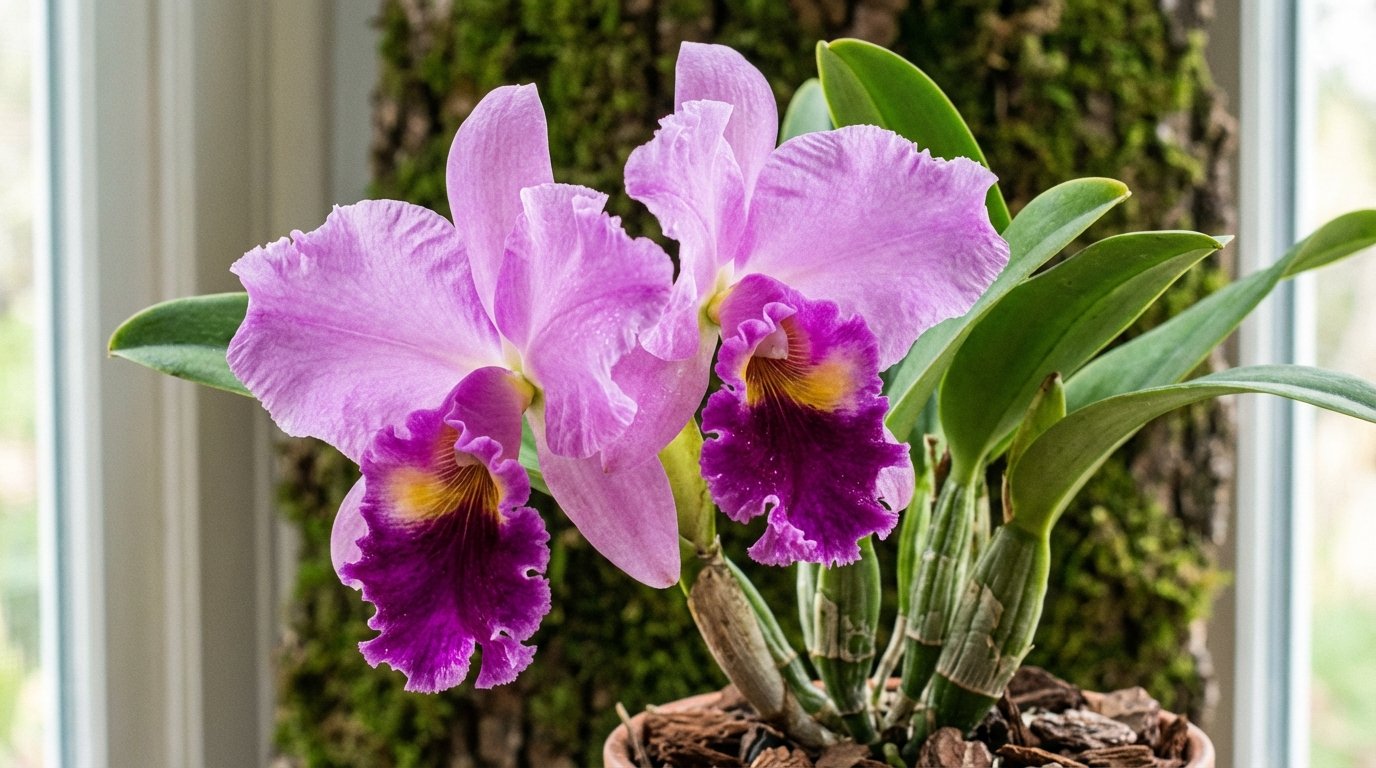
Cattleya — the classic "corsage orchid" with large, fragrant, ruffled blooms.
Often called the "corsage orchid," Cattleya species produce large, dramatic, intensely fragrant blooms. They need brighter light and a distinct dry rest period. Better suited to intermediate growers with a sunny window or grow lights.
Oncidium — The Dancing Lady

Oncidium — dozens of small "dancing lady" blooms on a single branching spray.
Recognized by their sprays of small, butterfly-like flowers — often in yellows and browns — Oncidium orchids are cheerful, easy growers that tolerate a range of conditions. They like bright light and slightly more frequent watering than Phalaenopsis.
For this guide: We'll focus primarily on Phalaenopsis care, since that's what most people have. Where other types differ significantly, we'll note it.
How to Water Orchids — The #1 Care Question
Watering is where most people go wrong with orchids. The instinct to water frequently — the way you would a pothos or fern — is exactly what kills them. Orchid roots need to dry out between waterings. Keeping them constantly wet leads to root rot, which is the number one orchid killer.
How Often to Water Orchids
Every 7–10 days is a solid starting point for Phalaenopsis orchids in bark mix. But the real answer is: water when the roots and medium are dry. Here's how to check:
- Look at the roots. Healthy, hydrated orchid roots are green or light green. When they turn silvery-white, it's time to water.
- Feel the medium. Stick a finger or wooden skewer into the bark. If it comes out damp, wait. If dry, water.
- Lift the pot. A dry pot feels noticeably lighter than a freshly watered one. After a few rounds, you'll develop an instinct for it.
The Ice Cube Method: Does It Actually Work?
You've probably heard the advice to water orchids with ice cubes. While it won't kill your plant outright, it's not ideal. Orchids are tropical — their roots don't appreciate ice-cold temperatures. Room-temperature water delivered in a thorough soak is always better. The appeal of ice cubes is portion control, but learning to read your orchid's roots is a more reliable approach.
Watering in Bark vs. Sphagnum Moss
Your watering frequency depends heavily on the potting medium:
- Bark mix dries out faster — water every 7–10 days.
- Sphagnum moss retains moisture much longer — water every 10–14 days and be cautious of overwatering.
How to water properly: Place the pot in a sink and run room-temperature water through the bark for 15–20 seconds, letting it drain completely. Some growers soak their orchids in a bowl of water for 10–15 minutes, then drain. Both methods work — the key is thorough watering followed by complete drainage. Never let an orchid sit in standing water.

Healthy green roots visible through a clear pot — a sign your orchid is well-hydrated.
Signs of Overwatering vs. Underwatering
- Overwatering: Yellowing lower leaves, mushy brown roots, foul smell from medium, crown rot.
- Underwatering: Wrinkled or leathery leaves, silvery-white shriveled roots, limp foliage.
When in doubt, err on the side of underwatering. Orchids recover from drought far more easily than from root rot.
Orchid Light Requirements
Getting the light right is the second most important factor in orchid care — and the key to triggering reblooming.
How Much Light Do Orchids Need?
Phalaenopsis orchids thrive in bright, indirect light — similar to what you'd find on a rainforest floor: filtered, dappled, never harsh. An east-facing window is ideal, offering gentle morning sun without the intensity of afternoon rays. South- or west-facing windows work with a sheer curtain. North-facing windows are often too dim for reblooming.
Reading Your Orchid's Leaves for Light Clues
- Too much light: Leaves turn yellowish-green or develop red-purple tinting. Brown sunburn patches appear.
- Too little light: Leaves are very dark green. The plant grows leaves but never produces flower spikes.
- Just right: Leaves are a bright, medium olive-green — a slightly yellowish tinge is actually a good sign.
If you don't have a suitable window, a full-spectrum LED grow light placed 12–18 inches (30–45 cm) above the orchid for 10–14 hours a day works well.
Temperature and Humidity for Orchids
Phalaenopsis orchids prefer daytime temperatures of 65–80°F (18–27°C) and a nighttime drop to 60–70°F (15–21°C). Most homes fall naturally in this range, which is one reason moth orchids make such good houseplants.
That nighttime temperature drop isn't just tolerated — it's a trigger. A difference of 10–15°F (5–8°C) between day and night temperatures, particularly in fall, signals the plant to initiate a flower spike. If your home stays the same temperature around the clock, your orchid may grow healthy leaves but never bloom.
Humidity
Orchids prefer 40–70% humidity. Most homes sit around 30–50%, which is usually adequate. To boost it: use a pebble tray (pot sits on pebbles above water, and evaporation raises local humidity), group plants together, or run a humidifier. Skip misting — it provides only seconds of humidity and can cause crown rot if water pools between the leaves.
How to Fertilize Orchids
Orchids aren't heavy feeders, but consistent fertilizing during the growing season makes a real difference in bloom size and frequency.
The golden rule: "Weakly, weekly." Use a balanced liquid fertilizer (20-20-20) diluted to one-quarter strength, every week during spring and summer. This mimics the dilute nutrients orchids receive in nature from rainwater running over tree bark.
- Spring–Summer: Fertilize weekly at quarter strength.
- Fall: Reduce to every other week.
- Winter: Stop entirely or reduce to once a month.
Important: Always water first, then fertilize. Never apply fertilizer to dry roots — it can cause chemical burn. Flush with plain water once a month to prevent salt buildup in the bark.
How to Repot an Orchid (Step by Step)
Orchid bark breaks down over time — it decomposes, compresses, and starts holding too much water. Repotting every 1–2 years keeps your orchid healthy. Here's when and how.
When to Repot
- The bark has turned mushy or started to decompose
- Roots are climbing out of the pot from every direction
- Water runs straight through without being absorbed
- You notice a sour smell from the medium
- Right after blooming ends — never repot during active bloom
Choosing the Right Pot and Medium
Use a pot with drainage holes — no exceptions. Clear plastic pots are popular because they let you monitor root health and allow the roots to photosynthesize. For potting medium, orchid bark mix is the standard — chunky, well-draining, and airy. Sphagnum moss works too but retains more moisture. Never use regular potting soil — it stays far too wet and will suffocate the roots.

Everything you need to repot: fresh bark mix, a clear pot, sterile shears, and your orchid.
Step-by-Step Repotting
- Water the orchid a day before — moist roots are more flexible and less likely to snap.
- Gently remove the orchid from its old pot. Cut the pot if roots are firmly attached.
- Remove all old medium from the roots. Rinse under lukewarm water.
- Trim dead roots. Healthy roots are firm and green or white. Dead roots are brown, mushy, or papery. Cut them off with sterile scissors.
- Place the orchid in the new pot and spread the roots around and down.
- Fill with fresh bark, gently working pieces between the roots. The plant should be snug but not packed tight.
- Wait 3–5 days before watering to let cut roots heal.
Your orchid may look droopy for a week or two — that's normal. Hold off on fertilizer for 4–6 weeks and keep it in indirect light.
How Long Do Orchids Live?
Here's something that surprises most people: orchids are not disposable plants. A well-cared-for Phalaenopsis orchid can live for 15–20 years or more. Some growers have specimens that have been blooming reliably for decades. In the wild, certain orchid species are known to survive for over a century.
The reason so many people think orchids are short-lived is simple — they toss them after the first bloom cycle ends. Once the flowers drop and the spike turns brown, the plant looks "dead." It's not. It's entering a rest phase before its next growth cycle. An orchid that loses its flowers is like a fruit tree in winter — dormant, not done.
What Determines an Orchid's Lifespan?
- Root health: This is the biggest factor. Orchids with healthy roots can bounce back from almost anything. Root rot from overwatering or decomposed medium is what shortens most orchids' lives prematurely.
- Repotting on schedule: Fresh bark every 1–2 years prevents the slow suffocation that kills roots over time. Skipping repotting is the most common reason orchids decline after a few years.
- Consistent care: Orchids don't need much, but they need it consistently. Steady light, seasonal watering adjustments, and occasional feeding keep them going year after year.
- Avoiding crown rot: A single episode of water sitting in the crown can kill an otherwise healthy plant. Always water at the roots, not from above.
The takeaway: if you treat your orchid as a long-term houseplant rather than a temporary decoration, it will reward you with blooms for many years. Some of the most impressive orchid collections started with a single grocery store Phalaenopsis that just kept going.
What to Do After Orchid Flowers Fall Off
This is the moment most people give up. The flowers drop, the spike turns brown, and they assume the plant is dead. It's not — it's resting. Here's how to help it come back stronger.
Should You Cut the Spike?
- If the spike is still green and firm: Don't cut it. Trim just above a visible node (the bumps along the spike) — it may branch and produce new flowers.
- If the spike is yellow or brown: Cut it off at the base with sterile scissors. The plant is done with it and will redirect energy to leaves and roots.
How to Get an Orchid to Rebloom
Getting a Phalaenopsis to rebloom takes two things: continued good care and a temperature cue.
- Keep up normal care — good light, regular watering, weekly fertilizing.
- Provide a temperature drop. In fall, expose the orchid to nighttime temperatures of 55–65°F (13–18°C) for 2–4 weeks. A spot near a slightly cool window works perfectly.
- Watch for a new spike. Within 4–8 weeks of the temperature drop, a new spike should emerge from between the leaves.
- Once the spike appears, return to normal warm conditions and support it with a small bamboo stake.

A new flower spike — the payoff of good care and a well-timed temperature drop.
Most Phalaenopsis orchids bloom once or twice a year, with flowers lasting 2–3 months each cycle. With Tendra's smart care reminders, you can set seasonal alerts for the fall temperature drop window so you never miss the timing.
Troubleshooting Common Orchid Problems
Orchid Leaves Turning Yellow
One bottom leaf yellowing: Usually natural. Orchids shed their oldest leaves periodically — completely normal.
Multiple leaves yellowing: Check for overwatering or root rot. Pull the orchid out of its pot and inspect the roots. Brown, mushy roots need to be trimmed, and the plant repotted in fresh bark.
Yellow + wrinkled leaves: Underwatering. Give the orchid a thorough soak.
Root Rot
Caused by overwatering or decomposed medium that stays too wet. Signs: mushy brown roots and a sour smell. To save it: trim all dead roots, let the remaining roots air-dry for several hours, repot in fresh dry bark, and wait 3–5 days before watering. If very few healthy roots remain, place the orchid in a humidity tray and mist the roots daily until new ones grow.
Orchid Not Blooming
Run through this checklist:
- Light: Is it getting bright indirect light? Very dark leaves = not enough.
- Temperature drop: Has it experienced cooler nights (55–65°F / 13–18°C) for a few weeks?
- Fertilizer: Are you feeding during the growing season?
- Time: Orchids need months between bloom cycles. Patience is part of the process.
Brown Spots on Leaves
- Dry, crispy spots: Sunburn from direct light. Move to a shadier spot.
- Soft, dark, spreading spots: Bacterial or fungal infection. Cut away affected tissue with a sterile blade, reduce moisture on leaves, and improve air circulation.
Common Pests
- Mealybugs: White cottony clusters in leaf joints — wipe with rubbing alcohol on a cotton swab.
- Scale: Brown, flat, shell-like bumps on leaves — scrape off gently and treat with neem oil.
- Spider mites: Fine webbing on leaves — increase humidity, wipe leaves, treat with insecticidal soap.
A Real-World Orchid Revival
Sarah from Portland inherited three Phalaenopsis orchids from her grandmother — all of them looking lifeless, with brown roots and shriveled leaves. She almost tossed them, but decided to try repotting first. After trimming the dead roots (one plant had only two healthy roots left), potting them in fresh bark, and moving them to her east-facing kitchen window, all three produced new roots within a month. By the following spring, two of the three had flower spikes. The third — the one with almost no roots — took an extra year but eventually bloomed a deep magenta. The lesson: orchids are remarkably resilient. Even when they look dead, they're often just waiting for the right conditions to come back.
Orchid Care Calendar: Season by Season
- Spring (March–May): Increase watering as growth resumes. Begin weekly fertilizing at quarter strength. Best time to repot after blooms fade. Watch for new leaves and roots.
- Summer (June–August): Peak growing season. Water more frequently as bark dries faster. Continue fertilizing. Keep out of direct afternoon sun. Monitor humidity.
- Fall (September–November): Reduce fertilizing. Provide a nighttime temperature drop of 55–65°F (13–18°C) for 2–4 weeks to trigger flower spikes. Reduce watering slightly.
- Winter (December–February): Blooming season for many Phalaenopsis. Reduce or stop fertilizing. Water less often. Keep away from cold drafts and heating vents. Enjoy the flowers — they'll last for months.
Orchid Care FAQs
Can I use regular potting soil for orchids?
No. Orchid roots need air circulation and fast drainage. Regular soil stays too wet and causes root rot. Use orchid bark mix or sphagnum moss.
How long do orchid blooms last?
Phalaenopsis blooms typically last 2–3 months. Some plants hold flowers even longer with good care and stable conditions.
Are orchids toxic to pets?
No — Phalaenopsis orchids are non-toxic to cats and dogs, making them one of the safest flowering houseplants for pet owners.
Can orchids grow in water?
Yes. Semi-hydroponic and full water culture are gaining popularity. The roots sit in water that's changed weekly. It works well for Phalaenopsis, though it requires adjustments to fertilizing.
Do orchids like to be misted?
Misting provides only momentary humidity and can cause crown rot if water pools in the leaf center. A pebble tray or humidifier is more effective.
How often do orchids bloom?
Most Phalaenopsis orchids bloom 1–2 times per year, with each bloom cycle lasting 2–3 months.
Your Orchid Care Starts Here
Orchids aren't the delicate divas they're made out to be. Give them bright indirect light, water them when the roots tell you to, feed them lightly through the growing season, and trigger reblooming with a fall temperature drop. That's genuinely 90% of orchid care.
The trickiest part isn't any single task — it's remembering the seasonal shifts in watering, fertilizing, and temperature. That's exactly the kind of thing a smart reminder does better than a human brain. Discover personalized orchid care schedules with Tendra — where local gardeners connect and thrive.


