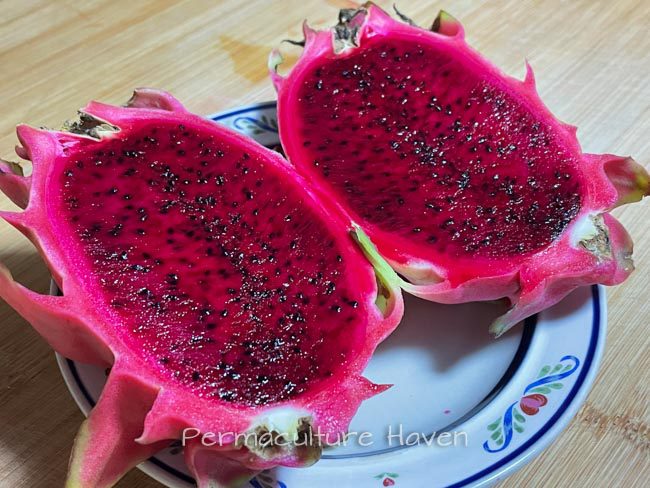
If your plants look healthy but your fruit numbers and fruit size are inconsistent, you are not alone. The biggest unlock for experienced growers is learning to manage the dragon fruit fruiting season as a sequence, not as isolated tasks. Dragon fruit (Selenicereus undatus) rewards timing. When fertilizer shifts, trimming decisions, irrigation rhythm, and pollination logistics line up, fruit set rises and quality stabilizes.
This guide is written for growers who already know the basics and want a production-focused system for fruiting season prep. We will focus on what to do in the weeks before bud set, what to change once flowers arrive, and how to keep fruit development moving without cracking, drop, or stalled fill. If you need the foundational setup, start here first: A Beginner’s Guide on How to Grow Dragon Fruit at Home. If pollination is your current bottleneck, keep this open too: How to Pollinate Dragon Fruit for a Bountiful Harvest.

What “fruiting season prep” really means for advanced growers
Experienced growers often enter season with one of two mistakes: they either feed too heavily for vegetative growth too late, or they trim too aggressively right before the first bloom wave. Both reduce fruit potential. Fruiting season prep is about preserving enough productive wood while shifting plant energy toward flower and fruit outcomes.
Think in four stages:
- Stage 1, Pre-bloom conditioning: 4 to 8 weeks before expected bloom
- Stage 2, Bloom and set: flower opening through early fruit set
- Stage 3, Fruit fill: size expansion and skin development
- Stage 4, Harvest and reset: quality picking and canopy renewal
Two practical facts matter here. First, many “low-yield” seasons are actually management timing misses, not genetics. Second, growers who track bloom and set by week can usually diagnose weak years faster than growers who only look at total harvest weight at season end.
Dragon fruit fruiting season starts with branch selection and light access
Dragon fruit fruiting season outcomes are set before flowers open. Buds form on capable, well-lit, physiologically ready segments. If your canopy center is dense and shaded, flowering potential drops even when the plant looks lush.
Pre-season trimming rules that preserve fruit potential
- Remove weak interior shoots that receive little direct light.
- Keep strong, outward-hanging segments that are likely to carry buds.
- Cut damaged or diseased tissue immediately with clean tools.
- Avoid heavy structural cuts right before expected bloom windows.
A good target is to remove low-value crowding while preserving most high-light fruiting wood. If you remove too much productive branch area in pre-bloom weeks, the plant spends energy on replacement shoots instead of flowers.
Fruiting wood map for each post
Use a quick three-label system on each canopy:
- F1: priority fruiting segments to preserve for current season
- R1: renewal shoots for next cycle
- R0: remove now (shaded, weak, or disease-prone)
This simple map prevents emotional pruning and keeps your trimming decisions consistent across all plants.

Pre-bloom fertilizer strategy: shift from growth to reproductive readiness
The most common nutrition error before fruiting season is staying too nitrogen-heavy too late. That produces strong green growth but weak bloom momentum. Instead, move from recovery feed to reproductive support in a controlled transition.
Week-by-week pre-bloom approach
- Weeks -8 to -6: balanced feed to stabilize canopy health after pruning and stress.
- Weeks -6 to -3: gradually taper nitrogen intensity, increase phosphorus and potassium support.
- Weeks -3 to 0: maintain steady micronutrients and moisture, avoid abrupt formula swings.
For experienced container growers, consistency beats intensity. Sudden spikes often create soft tissue that is less stable under heat and inconsistent watering. In-ground growers should also avoid large one-time applications right before bloom, split feeding is generally safer for stable uptake.
Nutrient focus by objective
- Nitrogen: enough to maintain healthy metabolism, not enough to trigger runaway vegetative surge.
- Phosphorus: support reproductive processes and root activity.
- Potassium: critical for fruit fill, firmness, and overall quality later in season.
- Calcium and magnesium: maintain tissue integrity and metabolic balance.
Tendra’s Smart Care Reminders are especially useful if you schedule feed transitions by stage, not by calendar month. Seasonal weather shifts can move your bloom window by several weeks, and rigid calendar feeding often misses the actual plant phase.

Fruiting-season irrigation: avoid the wet-dry rollercoaster
Once flowers appear and fruit sets begin, irrigation mistakes can erase good pruning and fertilizer work quickly. Large moisture swings are linked to fruit stress symptoms like cracking, uneven growth, and set drop.
Core irrigation rules during fruiting season
- Keep moisture fluctuations moderate, not extreme.
- Adjust runtime for heat waves and wind events quickly.
- Inspect emitters weekly so each post receives similar water volume.
- Never leave the crown area chronically saturated.
In containers, many growers do better with shorter, more frequent events during peak heat, then longer intervals during cloudy or humid stretches. In-ground systems often benefit from deep but controlled cycles that maintain aeration in the root zone.
Useful moisture benchmark
Let the upper zone dry slightly before the next cycle, while keeping deeper root areas active. This balance keeps roots oxygenated and reduces stress-driven fruit issues.
Dragon fruit fruiting season pollination workflow for higher set
Even with correct pruning and feeding, fruit set can fail if pollination timing is sloppy. Dragon fruit fruiting season success requires a process for bloom nights, not just good intentions.
Night-of-bloom checklist
- Scout buds at dusk and flag likely opening flowers.
- Prepare brush, labels, light, and collection containers before nightfall.
- Pollinate during receptive hours, usually evening to pre-dawn.
- Tag crosses and note weather, donor, and recipient.
For growers running mixed cultivars, build a compatibility table. Tendra’s Cultivar Explorer helps identify suitable pairings and likely bloom overlap. If your local block lacks overlap, Twin Plant Mates can help you coordinate pollen exchange with nearby growers.
As your system matures, track set percentage by cross combination. In one or two seasons, you will identify repeat high-performers and stop wasting nights on low-value pairings.

Fruit set to fruit fill: managing the most fragile phase
The period just after set is where many crops lose potential. At this stage, plant stress, heat shocks, and nutrition errors can trigger drop or uneven fruit development. The goal is stability.
What to prioritize after set
- Canopy balance: remove obviously weak, non-productive congestion that steals airflow.
- Water consistency: reduce major moisture oscillation.
- Potassium support: maintain fruit development momentum.
- Sunburn prevention: protect exposed fruit during extreme midday heat.
In very hot climates, temporary shade strategies can reduce skin injury without creating chronic low light. In cooler climates, reducing excess late nitrogen often helps maintain firmer fruit and more reliable finish.
Early warning signs during fill
- Sudden fruit softness before expected ripening window
- Patchy color progression and uneven swelling
- Increased flower or young fruit drop after weather swings
When these appear, diagnose sequence first: irrigation consistency, recent feed changes, and heat load. Avoid random “rescue” products before fixing process-level causes.
Fruiting season trimming, yes, but only surgical trimming
Growers often ask if trimming should continue during fruiting season. The answer is yes, but only with surgical intent. This is not the moment for major shape resets.
During-fruiting trimming do’s
- Remove diseased or damaged segments immediately.
- Open small shaded pockets that trap humidity around fruit.
- Trim only what directly improves light, airflow, or disease control.
During-fruiting trimming don’ts
- Do not remove large amounts of productive hanging wood.
- Do not perform full structural redesign during peak set.
- Do not chase perfect appearance at the expense of fruit support.
Think maintenance, not transformation. Save heavy structure work for post-harvest reset.
Real-world application: Sam’s seasonal turnaround in San Diego
Sam from San Diego had strong vegetative growth every year but inconsistent fruiting. He was feeding aggressively through spring and doing major trims as soon as canopies looked messy. His plants looked “healthy,” but fruit counts were unstable and many sets dropped in hot weeks.
He shifted to a fruiting-season playbook. Four to six weeks pre-bloom, he tapered nitrogen and moved into a phased fertilizer approach. He switched from large occasional irrigations to steadier cycles during heat. He kept only surgical trimming during active fruiting, then did deeper renewal after harvest.
He also used Tendra reminders to track bloom windows and pollination nights, then logged which cultivar pairings gave better set. By the end of the season, he had fewer drops, better average fruit size, and less cracking. The breakthrough was process timing, not extra inputs.
Harvest timing for quality, sweetness, and shelf life
Harvest decisions should be part of fruiting season management, not an afterthought. Picking too early can reduce flavor expression. Picking too late raises cracking risk and storage loss, especially in hot weather.
Reliable harvest cues
- Uniform skin coloration across most of the fruit body
- Slight, controlled give to gentle pressure
- Healthy external structure without severe dehydration
Use clean shears, leave a short stem stub, and move harvested fruit to shade immediately. In warm afternoons above 90°F (32°C), post-harvest heat can degrade quality quickly.
Simple grading system for better next-season decisions
- Grade A: top shape, color, and skin quality
- Grade B: minor cosmetic flaws, excellent home use
- Grade C: cracked or damaged, process quickly
Record grade outcomes by cultivar and week. This data makes next-season trimming and feed changes far smarter than memory alone.
Fruiting season calendar, quick reference
6 to 8 weeks before expected bloom
- Trim for light and airflow without over-removing fruiting wood
- Begin fertilizer transition away from heavy vegetative push
- Confirm irrigation hardware uniformity
3 to 5 weeks before bloom
- Finalize pollination plan and cultivar compatibility list
- Monitor bud formation and adjust feed gently
- Avoid major structural cuts
Bloom through early set
- Run night pollination workflow consistently
- Track set by cultivar pairing
- Maintain stable moisture and avoid abrupt nutrient changes
Fruit fill through harvest
- Prioritize potassium support and irrigation consistency
- Use only surgical in-season trimming
- Harvest by quality cues, not only by color
Post-harvest reset
- Perform heavier renewal trimming and structural corrections
- Rebuild canopy health for next cycle
- Review data and update next-season plan
Common fruiting-season mistakes that reduce yield
- Late nitrogen-heavy feeding: lush growth, weaker reproductive focus.
- Major trimming during active set: sudden loss of productive capacity.
- Inconsistent irrigation under heat: cracking and drop risk rises.
- No pollination records: repeated low-value crosses and missed opportunities.
- No weekly scouting routine: pests and stress signals caught too late.
Correcting these mistakes usually improves results faster than buying new inputs. Process discipline compounds over seasons.
Advanced fertilizer and trimming matrix by scenario
Because fruiting season conditions can change fast, experienced growers benefit from a scenario matrix instead of one static plan. Use this as an operational framework and adapt to your site conditions.
Scenario A: strong bloom, weak set
- Check first: pollination coverage, cultivar compatibility, bloom-night weather.
- Fertilizer move: avoid adding extra nitrogen as a reflex; keep balanced reproductive support.
- Trimming move: open dense interior pockets that reduce flower quality and pollinator access.
- Irrigation move: stabilize cycles, avoid stress swings during flower-to-set transition.
Scenario B: good set, small fruit
- Check first: canopy load per post, potassium sufficiency, root-zone moisture stability.
- Fertilizer move: maintain fruit-fill support and micronutrient consistency.
- Trimming move: remove low-value sinks and shaded weak growth competing with fruit.
- Irrigation move: ensure consistent root-zone activity, especially during hot afternoons.
Scenario C: cracking and uneven color
- Check first: wet-dry extremes, heat stress exposure, sudden formula changes.
- Fertilizer move: stop abrupt feed pivots, return to steady fruit-phase nutrition.
- Trimming move: create light ventilation around fruit clusters without heavy wood removal.
- Irrigation move: reduce extreme dry-down and sudden re-saturation events.
This matrix helps you avoid the common trap of solving every issue with more product. Most fruiting season failures are timing and process failures first.
Regional adjustments for fruiting season planning
Fruiting season prep is not identical across climates. The same fertilizer and trimming schedule that works in a humid subtropical yard may fail in arid inland heat or cool coastal nights.
Arid heat regions
- Start pre-bloom transitions earlier because heat can accelerate plant stress quickly.
- Use midday protection strategies during severe heat waves to reduce sunburn risk.
- Watch potassium and calcium consistency during rapid transpiration periods.
Humid subtropical regions
- Prioritize airflow trimming to reduce fungal pressure in dense canopies.
- Avoid over-irrigating after storms when root zones already remain wet.
- Scout weekly for early soft tissue disease signs around crowded nodes.
Cool-night coastal or marginal zones
- Protect bloom windows from prolonged cold snaps where possible.
- Avoid late-season vegetative pushes that leave soft tissue vulnerable.
- Use container mobility strategically if frost risk appears.
These regional adaptations are where Tendra community data becomes powerful. Nearby growers facing your exact weather pattern often reveal practical timing tweaks faster than generic advice.
Fruiting season data to log every week
If you want expert-level consistency, track a compact data set every week during active season. The point is not to create paperwork, it is to create repeatable decisions.
- Bloom count per canopy
- Set count by pollination pairing
- Irrigation notes during weather events
- Trimming actions completed and why
- Fruit quality notes (size, cracking, firmness, color progression)
In two or three cycles, this turns into a local playbook tailored to your yard. It also helps you avoid memory bias, where one big harvest week hides the weak management decisions that hurt the rest of the season.
Advanced weekly checklist (in-season)
Monday, canopy and irrigation
- Inspect emitters, runtimes, and moisture pattern uniformity.
- Check for congestion points needing surgical airflow trimming.
Wednesday, nutrition and stress signals
- Review feed stage and confirm no unnecessary formula jump.
- Scan for early fruit stress symptoms and leaf tissue imbalance.
Friday, bloom planning and pollination prep
- Flag likely opening buds and prep bloom-night tools.
- Confirm pollen donor options and labeling materials.
Weekend, fruit quality and record updates
- Log set percentage by pairing and weather context.
- Record fruit quality trajectory by canopy zone and cultivar.
This cadence keeps the season proactive. Instead of reacting after losses, you make small corrections before problems compound.
Conclusion: treat fruiting season like a managed production cycle
When growers focus on stage-based prep, fruiting season becomes more predictable. Trim to preserve productive wood, transition fertilizer before bloom, stabilize irrigation during set and fill, and keep pollination organized. That is the foundation of reliable, high-quality output in the dragon fruit fruiting season.
You can run this system in a backyard, small farm, or container setup as long as your timing is intentional. Discover Cultivar Explorer and Smart Care Reminders with Tendra - where local gardeners connect and thrive.